




Contents
- How to calculate profit per block
- A real recipe from Ghana: 62.5 blocks from one bag
- Our assumptions
- Lagos, Nigeria: 9-inch blocks
- Accra, Ghana: 6-inch blocks
- Nairobi, Kenya: 150 mm blocks
- Profit by machine size: 4,000, 8,000 or 10,000 blocks a day
- Nairobi: how to raise the profit
- What changes your profit
- Which machine for which volume?
- How long does it take to pay back the investment?
- What this calculation does not include
- Sources for the prices
- Frequently asked questions
Short answer: yes, a block making business is profitable when the blocks are made by machine, cement per block is kept low and the yard sells a steady volume every day. In our calculation the margin on a machine-made block is roughly 44–59% in Lagos, 33–53% in Accra and 24–41% in Nairobi. The profit comes from volume: the same margin multiplied by thousands of blocks a day. A yard with an 8,000-block machine running at full capacity and selling its full output makes about US$65,000 a month in Lagos, US$42,000 in Accra and US$19,000 in Nairobi.
Most articles on block making business profitability either give no numbers or are written by machine sellers promising 50–70% margins. This guide works the other way round: it starts from a real production recipe from one of our customers in Ghana, adds local prices for cement, sand, chippings, labour and diesel with their sources, and calculates cost and profit per block for three cities. You can repeat the calculation with your own prices.
How to calculate profit per block
The formula is simple:
Profit per block = selling price − (cement + sand + chippings + labour + energy + other costs)
Cement is the biggest cost, so the most important number in the whole business is how many blocks you make from one bag of cement. Hand-moulded sandcrete blocks need a lot of cement: Nigerian guides give about 18–25 blocks per 50 kg bag at a 1:8 mix. A machine that vibrates and presses the mix can make far more blocks from the same bag.
A real recipe from Ghana: 62.5 blocks from one bag
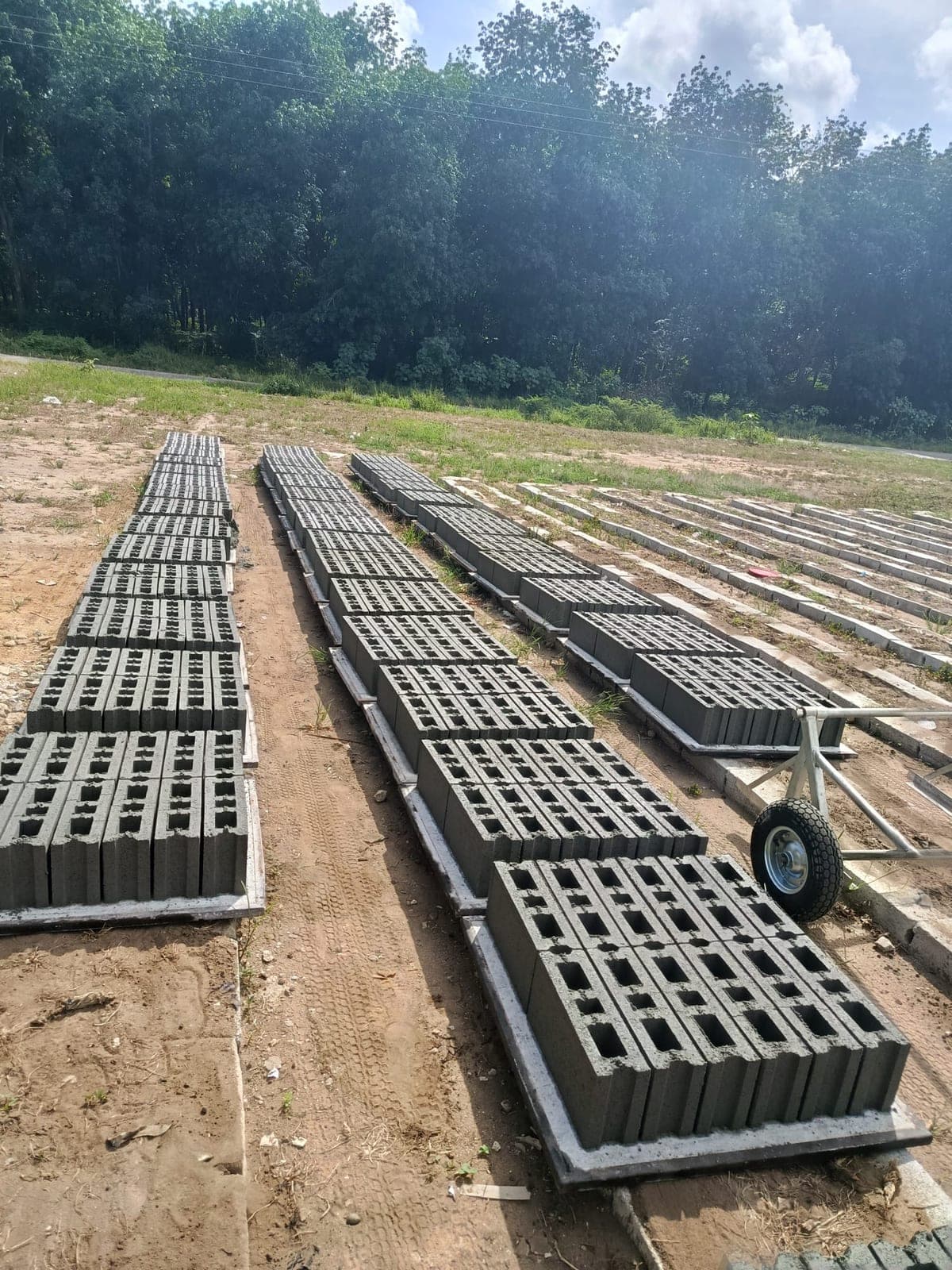
One of our customers in Ghana produced 7,500 hollow blocks of 150×400×200 mm with 30 mm shells, using:
- 120 bags of cement (50 kg)
- 3 trucks of sand, 18.5 m³ each (55.5 m³)
- 2 trucks of chippings, 18.5 m³ each (37 m³)
That is 62.5 blocks per bag of cement, or about 0.8 kg of cement per block, plus about 0.0074 m³ of sand and 0.0049 m³ of chippings per block. We use exactly this recipe in the calculations below. For other block sizes we scale it by the concrete volume of the block, with the same 30 mm shells: a 9-inch hollow block as made by machine in Nigeria (400×200×225 mm) needs about 1.21 times the concrete of a 150 mm block, so about 52 blocks per bag. Thinner 25 mm shells need about 15% less concrete, so about 17% more blocks per bag; thicker shells give fewer.
The recipe is lean because the machine compacts the concrete with vibration and hydraulic pressure. Always check your blocks against your local standard and have a few blocks tested before you sell in volume.
Our assumptions
- A BLOCKMASTER 4 or CBM 12 with a crew of 8 (operator, mixer, pallets, stacking), making 4,000 blocks a day of 9-inch or 200 mm blocks, or 5,000 of 6-inch or 150 mm blocks.
- The machine runs at full capacity, six days a week, 26 days a month, and the yard sells its full output.
- A generator burning about 45 litres of diesel a day.
- 6% added for water, curing, maintenance, about 3% breakage and small costs.
- Monthly profit is cautious: it uses the low end of the selling price range, 5% material waste, 30% higher pay for skilled operators, 10% other costs and about US$1,500 a month of fixed costs (manager, security, rent, maintenance).
- Prices are local market prices found at the time of writing; the sources are listed at the end. Prices change, so check yours.
Lagos, Nigeria: 9-inch blocks
| Item | Price used | Cost per block |
|---|---|---|
| Cement (50 kg bag) | ₦11,500–13,550; we used ₦12,500 | ₦242 |
| Sharp sand | ₦290,000–400,000 per 30 t trip (≈₦17,000/m³) | ₦152 |
| Chippings / stone dust | ≈₦25,000/m³ | ₦149 |
| Labour | ₦6,000–8,000 per day per worker | ₦16 |
| Diesel | ≈₦1,790 per litre | ₦20 |
| Total cost per block (with 6% other) | ≈₦614 |
Ordinary 9-inch blocks sell for about ₦650–1,100 in Lagos, which leaves only a thin margin at the low end. Vibrated, stone-dust blocks sell for about ₦1,100–1,500, and that is where a machine-made block belongs. At those prices the margin is about ₦486–886 per block (44–59%). At the low end of that price range and with the cautious costs above, a BLOCKMASTER 4 running at full capacity (4,000 blocks a day) and selling its full output makes about ₦42.5 million (≈US$31,200) a month. Our block machine capacities are quoted for 400×200 mm blocks; ask us for the 9-inch mould output of the model you are considering.
Accra, Ghana: 6-inch blocks
| Item | Price used | Cost per block |
|---|---|---|
| Cement (50 kg bag) | GH₵110–135; we used GH₵122 | GH₵1.95 |
| Sand | GH₵2,700–3,300 per 20 m³ truck (≈GH₵150/m³) | GH₵1.11 |
| Chippings / quarry dust | ≈GH₵200/m³ | GH₵0.99 |
| Labour | GH₵100–120 per day per worker | GH₵0.18 |
| Diesel | ≈GH₵19 per litre | GH₵0.17 |
| Total cost per block (with 6% other) | ≈GH₵4.66 |
6-inch blocks sell for about GH₵7–10 in Greater Accra. The margin is therefore about GH₵2.3–5.3 per block (33–53%). At the low end of that price range and with the cautious costs above, a BLOCKMASTER 4 running at full capacity (5,000 blocks a day) and selling its full output makes about GH₵227,000 (≈US$19,400) a month. Many Accra buyers expect free delivery for orders of a few hundred blocks, so include your truck costs.
Nairobi, Kenya: 150 mm blocks
| Item | Price used | Cost per block |
|---|---|---|
| Cement (50 kg bag) | KSh 700–855; we used KSh 770 | KSh 12.3 |
| Quarry dust (instead of river sand) | KSh 900–1,200 per tonne (≈KSh 1,500/m³) | KSh 11.1 |
| Ballast / chippings | ≈KSh 2,500/m³ (estimate) | KSh 12.3 |
| Labour | Minimum wage ≈KSh 870 per day | KSh 1.4 |
| Diesel | ≈KSh 228 per litre | KSh 2.1 |
| Total cost per block (with 6% other) | ≈KSh 42 |
Concrete blocks of 150 mm sell for about KSh 55–70 in Nairobi, so the margin is about KSh 13–28 per block (24–41%). At the low end of that price range and with the cautious costs above, a BLOCKMASTER 4 running at full capacity (5,000 blocks a day) and selling its full output makes about KSh 1.0 million (≈US$8,000) a month. Nairobi prices are low, so volume and a good selling price matter more than anywhere else; see the plan for Nairobi below. River sand costs about twice as much as quarry dust in Nairobi, which is why most block makers there use dust. Nairobi buyers also compare blocks with machine-cut stone, so quality and delivery matter. For 9-inch blocks and for Mombasa, Kisumu, Nakuru and Eldoret, see block making in Kenya city by city.
Profit by machine size: 4,000, 8,000 or 10,000 blocks a day
With a bigger machine, labour and diesel are spread over more blocks. In this table each machine runs at full capacity and the yard sells its full output, at the low end of the price range, 26 working days a month (six days a week), with 5% material waste, 30% higher pay for skilled operators, 10% other costs and fixed costs of about US$1,500, 2,500 and 3,000 a month (manager, sales, security, rent, maintenance and mould wear). For 6-inch and 150 mm blocks the machines make 5,000, 10,000 and 12,000 a day; for Lagos we use the 200 mm outputs of 4,000, 8,000 and 10,000, so ask us for the 9-inch mould output of each model.
Lagos (9-inch blocks)
| Machine | Capacity per day | Sold per day | Crew | Diesel per day | Cost per block sold | Profit per month |
|---|---|---|---|---|---|---|
| BLOCKMASTER 4 / CBM 12 | 4,000 | 4,000 | 8 | ≈45 L | ₦672 | ₦42.5 million (≈US$31,200) |
| BLOCKMASTER 8 / CBM 20 | 8,000 | 8,000 | 11 | ≈70 L | ₦660 | ₦88.1 million (≈US$64,800) |
| CBM 25 | 10,000 | 10,000 | 14 | ≈70 L | ₦657 | ₦111.1 million (≈US$81,700) |
Accra (6-inch blocks)
| Machine | Capacity per day | Sold per day | Crew | Diesel per day | Cost per block sold | Profit per month |
|---|---|---|---|---|---|---|
| BLOCKMASTER 4 / CBM 12 | 5,000 | 5,000 | 8 | ≈45 L | GH₵5.12 | GH₵227,000 (≈US$19,400) |
| BLOCKMASTER 8 / CBM 20 | 10,000 | 10,000 | 11 | ≈70 L | GH₵5.00 | GH₵491,000 (≈US$42,000) |
| CBM 25 | 12,000 | 12,000 | 14 | ≈70 L | GH₵4.99 | GH₵594,000 (≈US$50,700) |
Nairobi (150 mm blocks)
| Machine | Capacity per day | Sold per day | Crew | Diesel per day | Cost per block sold | Profit per month |
|---|---|---|---|---|---|---|
| BLOCKMASTER 4 / CBM 12 | 5,000 | 5,000 | 8 | ≈45 L | KSh 46 | KSh 1.0 million (≈US$8,000) |
| BLOCKMASTER 8 / CBM 20 | 10,000 | 10,000 | 11 | ≈70 L | KSh 44 | KSh 2.4 million (≈US$18,700) |
| CBM 25 | 12,000 | 12,000 | 14 | ≈70 L | KSh 44 | KSh 3.0 million (≈US$22,900) |
The crew sizes are our planning assumption; diesel is for the generator running the machine and mixer, and our 8,000 and 10,000-block machines burn about the same. These are cautious figures: the low end of the price range and cautious costs.
Nairobi: how to raise the profit
Nairobi block prices are low, so the cautious figures look thin, but they are a floor, not a forecast. Here is what a yard with a BLOCKMASTER 8 or CBM 20 (10,000 blocks a day) gains step by step. Each line keeps the changes above it:
| Step | Cost per block sold | Profit per month |
|---|---|---|
| Starting point: the BLOCKMASTER 8 / CBM 20 row of the machine-size table above | KSh 44.4 | KSh 2.4 million (≈US$18,700) |
| Buy cement direct from the distributor (about KSh 700 a bag instead of 770) | KSh 43.1 | KSh 2.8 million (≈US$21,300) |
| Use 25 mm shells, if your blocks still pass the strength test | KSh 37.4 | KSh 4.3 million (≈US$32,700) |
| Sell at the middle of the price range (KSh 62.5): uniform, tested blocks | KSh 37.4 | KSh 6.2 million (≈US$47,700) |
Together with the machine-size table above, this shows the range from a cautious floor to what the best yards in Nairobi achieve.
We have run the same calculation, with local prices, for more markets in East and Southern Africa: block making in Uganda, block making in Tanzania and block making in Zambia.
What changes your profit
- Blocks per bag of cement. Moving from 25 to 62.5 blocks per bag roughly halves the cost of a block. This is the main reason machine production pays.
- Selling price and quality. Vibrated, uniform blocks sell in the higher price band. Weak blocks made with too little cement sell cheap and damage your name.
- Volume. Labour and energy per block fall as output rises. A semi-automatic machine makes thousands of blocks a day with the same crew.
- Aggregate source. Sand and chippings are the second biggest cost. A yard close to the quarry, or one that buys full trucks, saves a lot.
- More products. With a mould change the same machine makes paving stones (cabro), kerbs and solid blocks, which often sell at better margins.
- Delivery and contracts. Charging for delivery and selling directly to contractors and estate developers keeps the yard busy every day.
Which machine for which volume?
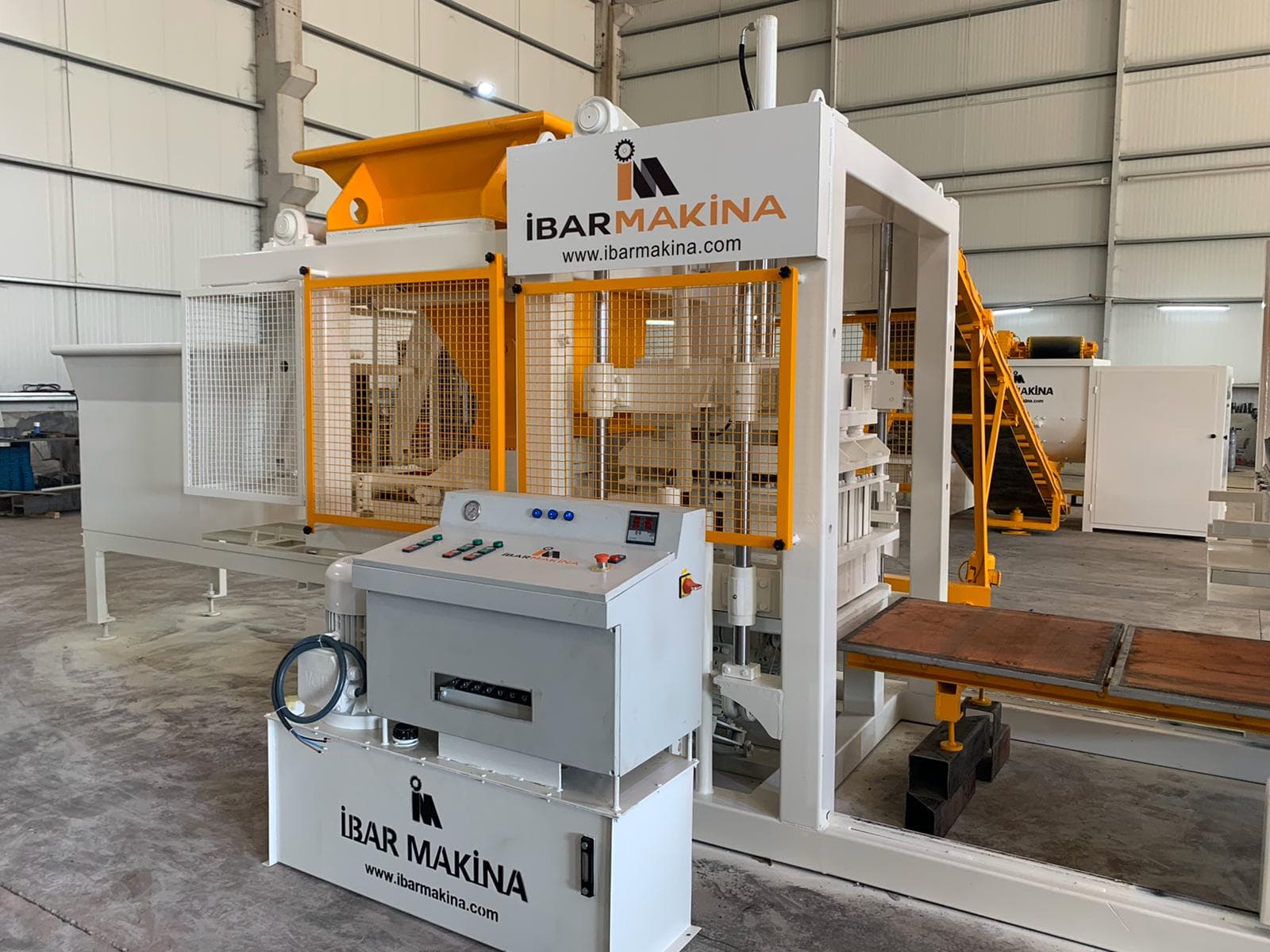
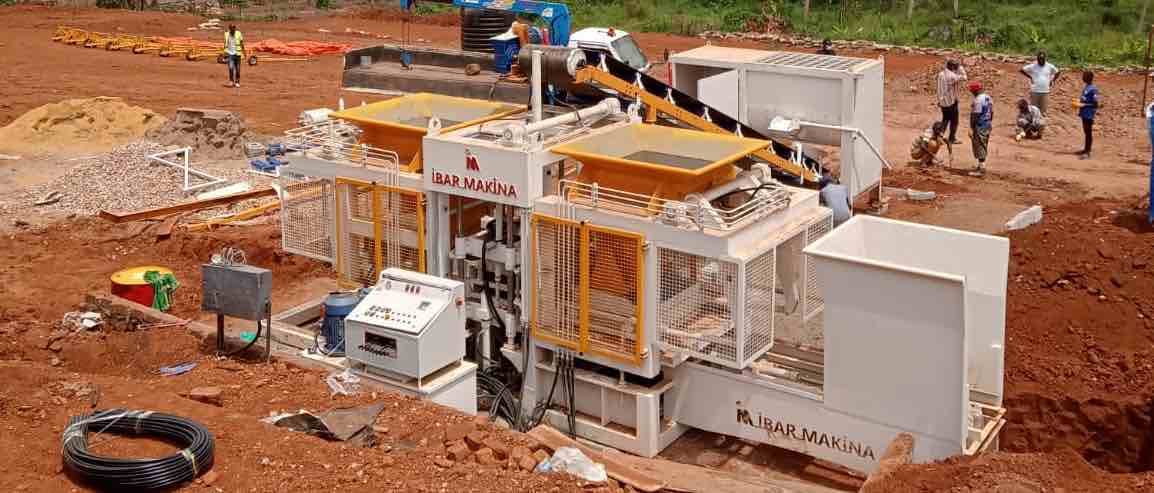
- Up to about 4,000–5,000 blocks a day: BLOCKMASTER 4 or CBM 12 (4 blocks of 20 cm or 5 of 15 cm per cycle). The egg-laying MBM4 works without pallets.
- About 8,000–10,000 blocks a day: BLOCKMASTER 8 or CBM 20.
- About 10,000–12,000 blocks a day and paving stones: CBM 25, or the fully automatic CBM 25 PRO.
To plan your daily output, see our guide to block machine capacity calculation; for mix design, see concrete block mix proportions.
How long does it take to pay back the investment?
Divide your total investment (machine, moulds, mixer, generator, site preparation and working capital) by your monthly profit. Use the profit after the costs our table leaves out: land or rent, trucks, depreciation, taxes and loan repayments. Start with the lower sales scenario; most yards take a few months to build steady customers.
What this calculation does not include
- Land, rent, buildings and a curing area.
- Delivery trucks and fuel for delivery.
- Depreciation, taxes, permits and loan repayments.
- Unsold stock and slow months in the rainy season.
Sources for the prices
- Lagos: cement prices (Legit.ng), block and sand prices (Mypricespot, NigeriaBuildingCost), stone dust (Structurecity), labour (BuildWithEase), diesel (GlobalPetrolPrices).
- Accra: building material prices (Yen.com.gh, Ghanamma), sand per truck (AA Plus Sand and Stone), quarry dust and labour (ExactoCost), diesel (Citi Newsroom).
- Nairobi: block and material prices (JengaHub, CarbonCube), quarry dust (Nairobi Concrete Solutions), minimum wage (Biashara Guide), diesel (The Star / EPRA).
- Blocks per bag for hand-moulded blocks: Structville, Nairaland.
Frequently asked questions
How many blocks can one bag of cement make?
Hand-moulded sandcrete blocks: about 18–25 per 50 kg bag at a 1:8 mix. Machine-made concrete blocks: one of our customers in Ghana made 62.5 blocks of 150×400×200 mm per bag, using sand and chippings.
Is a block making business profitable in Nigeria?
Yes, with machine-made blocks sold in the vibrated, stone-dust price band. In Lagos our calculation gives about ₦486–886 profit per 9-inch block. For Abuja, Kano, Port Harcourt and Ibadan see block making business profit in Nigeria by city. Ordinary hand-moulded blocks leave very little margin at current cement prices. See also how to start a block making business in Nigeria.
How much profit per block in Ghana and Kenya?
In Accra about GH₵2.3–5.3 per 6-inch block, in Nairobi about KSh 13–28 per 150 mm block, using the recipe and prices in this guide. For Kumasi, Takoradi and Tamale, see block making business profit in Ghana by city.
Which machine should I start with?
Most new yards start with a semi-automatic machine making about 4,000–5,000 blocks a day, such as the BLOCKMASTER 4 or CBM 12, and add a larger machine when sales grow.
Does İBAR MAKİNA install the machine?
Yes. On-site installation and operator training are included in the price, machines carry a 2-year warranty and spare parts are shipped from stock on the same day.
Send us your city, the blocks you want to make and your target daily output on WhatsApp, and we will recommend a machine and run the numbers with your local prices.