




Contents
Concrete blocks are the main walling material in Nigeria. Houses, shops, fences and estates in Lagos, Abuja, Port Harcourt, Kano and every growing town are built with hollow sandcrete blocks, so a well-run block industry sells every day of the year. This guide explains, step by step, how to start a block making business in Nigeria: what to produce, which machine to choose, how to plan the site, power and materials, what the investment includes, and how the machine reaches your yard.
1. Decide what you will sell
Start from your buyers, not from the machine. Visit the building sites, block yards and builders' merchants around your planned location and note what moves fastest:
- Hollow blocks: 6-inch and 9-inch hollow sandcrete blocks are the everyday products for walls and fences.
- Solid blocks: for foundations, load-bearing walls and high-traffic areas.
- Interlocking paving stones: for compounds, estates, filling stations and roads.
- Kerbs: for road and estate projects.
All of these can be produced on the same vibro-press machine by changing the mould, and moulds are made in the block sizes you sell in your area. Many plants start with hollow blocks and add paving stones once they have regular buyers.
2. Choose your daily capacity and machine
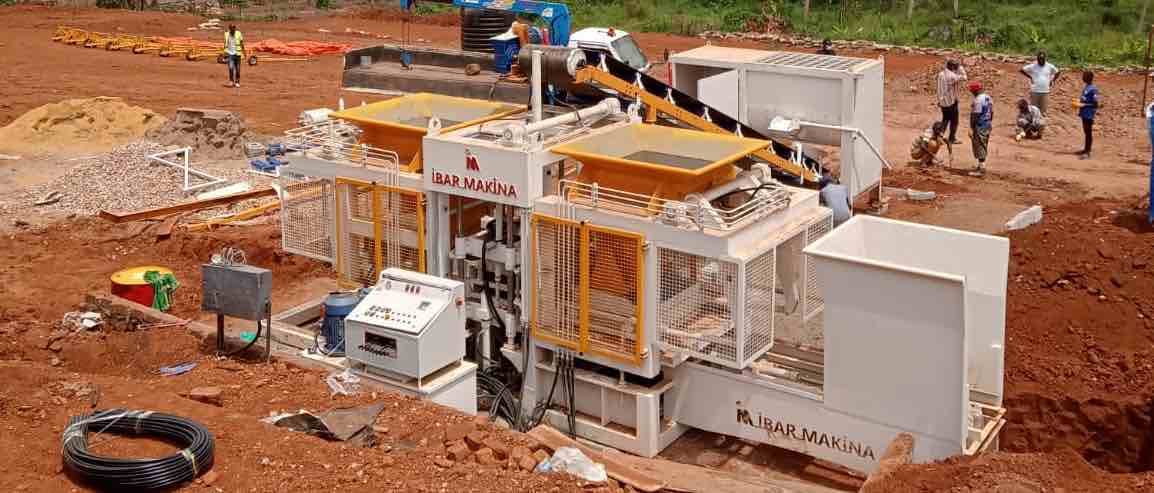
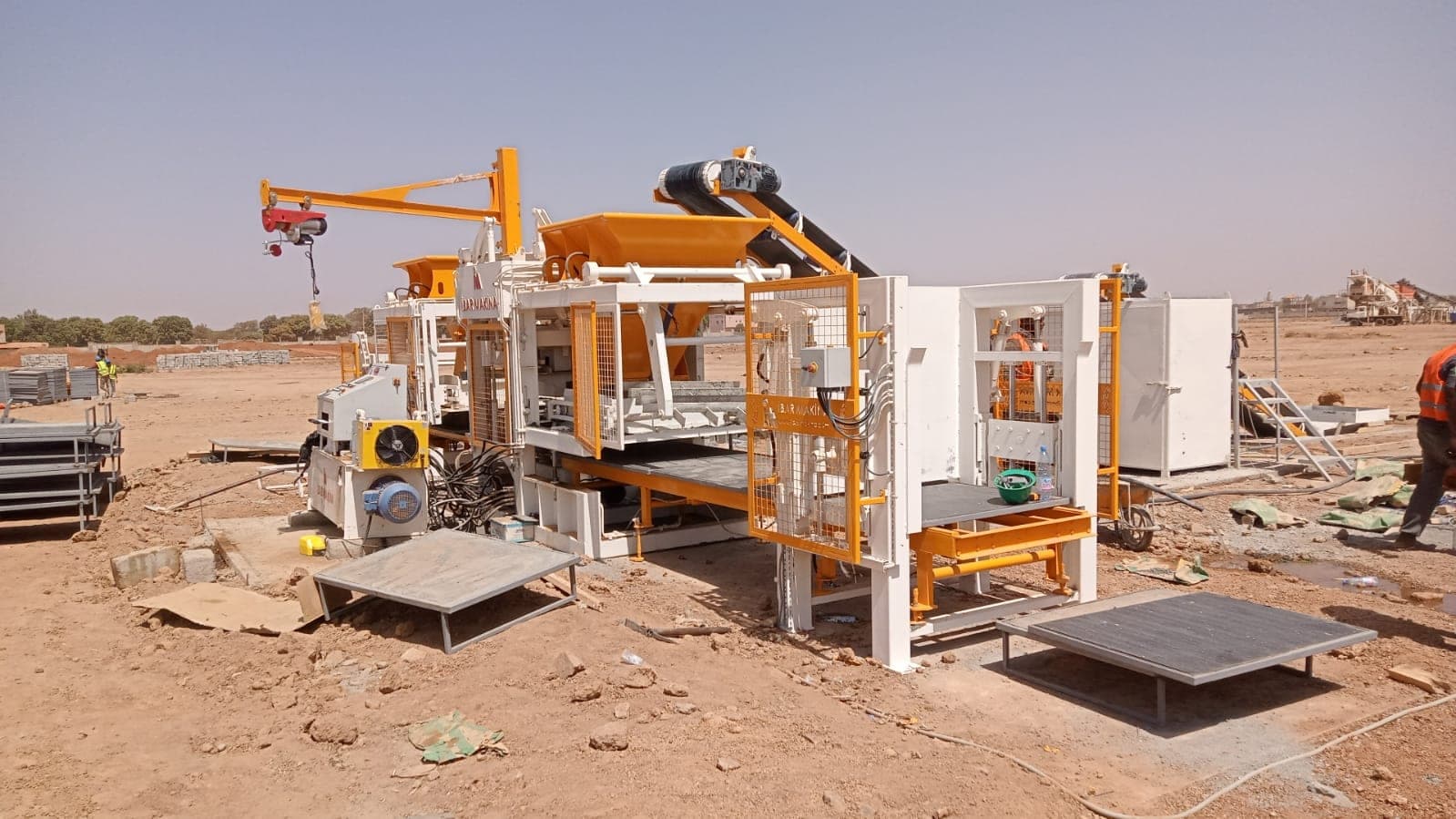
Daily output decides almost everything else: the machine, the mixer, the size of the yard, the number of pallets and the working capital you need for cement. Use these figures as a guide (blocks of 200 mm per day, from our product records):
| Stage | Machines | Blocks per day (approx.) |
|---|---|---|
| First plant, smaller yard | CBM 12-2, BLOCKMASTER 4 | 4,000 |
| First plant without pallets | MBM4 egg-laying machine (lays blocks on a concrete floor) | 4,000 |
| Growing supplier | CBM 20-2, BLOCKMASTER 8 | 8,000 |
| Large supplier | CBM 25, BLOCKMASTER 10 | 10,000 |
| Industrial plant | CBM 25 PRO, CBM 36 PRO | 10,000–12,000 / 15,000–18,000 |
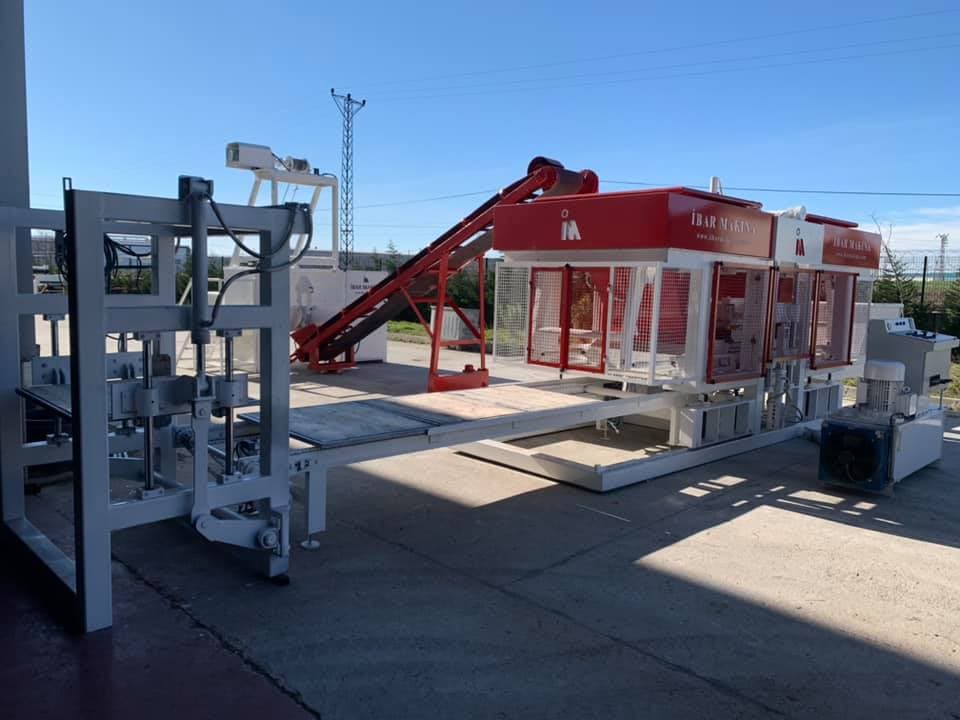
Double-hopper models (CBM 12-2, CBM 20-2, CBM 25) can also make two-layer coloured paving stones. If labour is expensive or hard to find, a version with a pallet stacking robot reduces the number of workers handling fresh blocks. Our capacity calculation guide and semi-automatic vs fully automatic comparison help you choose.
3. Plan the site
A block plant needs more space for curing and stacking than for the machine itself. Plan for:
- a level concrete floor for the machine, the mixer and the conveyors, ideally under a roof or shed;
- a shaded curing area large enough for one to two days of production, because fresh blocks must not dry out in direct sun;
- a stacking yard for cured blocks with truck access for loading;
- covered storage for cement and space for sand and stone dust deliveries;
- a reliable water supply for mixing and for keeping the blocks moist while they cure.
An egg-laying machine needs no pallets but a much larger, level concrete yard, because it lays the blocks directly on the floor.
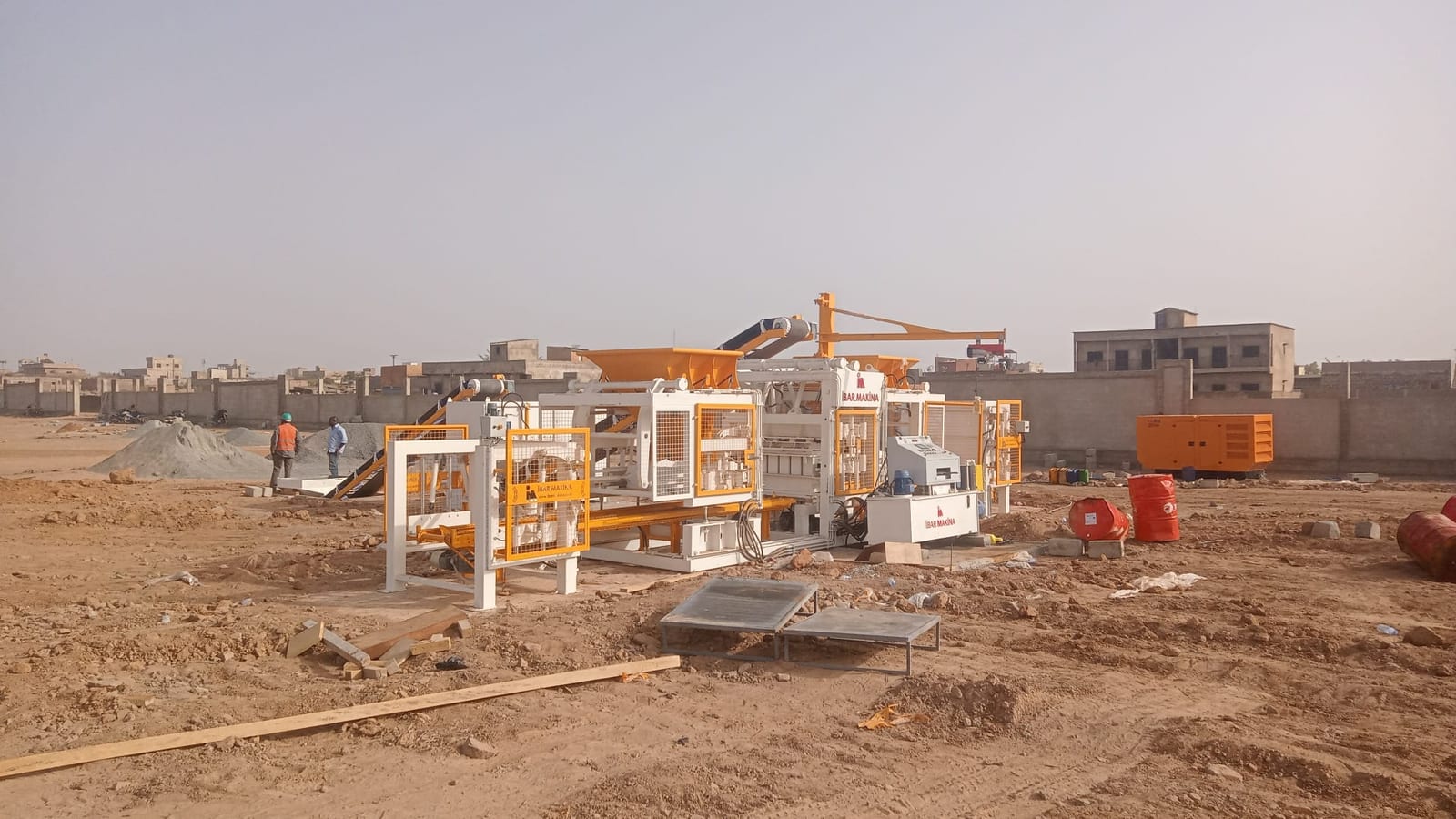
4. Power: plan for a generator
Many block factories in Nigeria run on a diesel generator, either as the main supply or as a back-up for the grid. Size it from the installed power of the whole line — machine, mixer and conveyors — not from the machine alone; every İBAR MAKİNA quote lists the power of each unit so your electrician can choose the right generator. Budget for diesel as a daily running cost.
5. Raw materials and block quality
Blocks are made from cement, sharp sand or stone dust, and water. Buyers judge you by strength and by how cleanly your blocks hold their edges, so control three things from the first day: the cement ratio, the moisture of the mix, and the curing. Our guide to concrete block mix proportions and moisture control explains how each one affects strength. A vibro-press compacts the mix far better than manual moulding, which is why machine-made blocks are stronger at the same cement content.
6. Registration and standards
Register your company with the Corporate Affairs Commission (CAC) and check the permits your state and local government require for an industrial site. Sandcrete blocks in Nigeria are covered by a national product standard; ask the Standards Organisation of Nigeria (SON) which requirements apply to your products, and test samples from your first production runs so you can show buyers consistent strength.
7. What the investment includes
When you compare offers, list every cost item, not only the machine:
- block machine and the moulds for each product you plan to sell;
- concrete mixer, belt conveyors and, if needed, an aggregate batching unit;
- production pallets (not needed with an egg-laying machine);
- generator, electrical installation and water supply;
- land, concrete floor and shed;
- sea freight, customs clearance and transport to your site;
- working capital for cement, sand and diesel for the first months;
- a pallet trolley for moving fresh blocks, or a forklift if you choose a line with a stacking robot;
- a truck if you will deliver to customers.
Our article on block making machine prices explains how capacity, automation and moulds change the cost. For a general checklist, see setting up a concrete block factory.
8. Delivery, installation and training
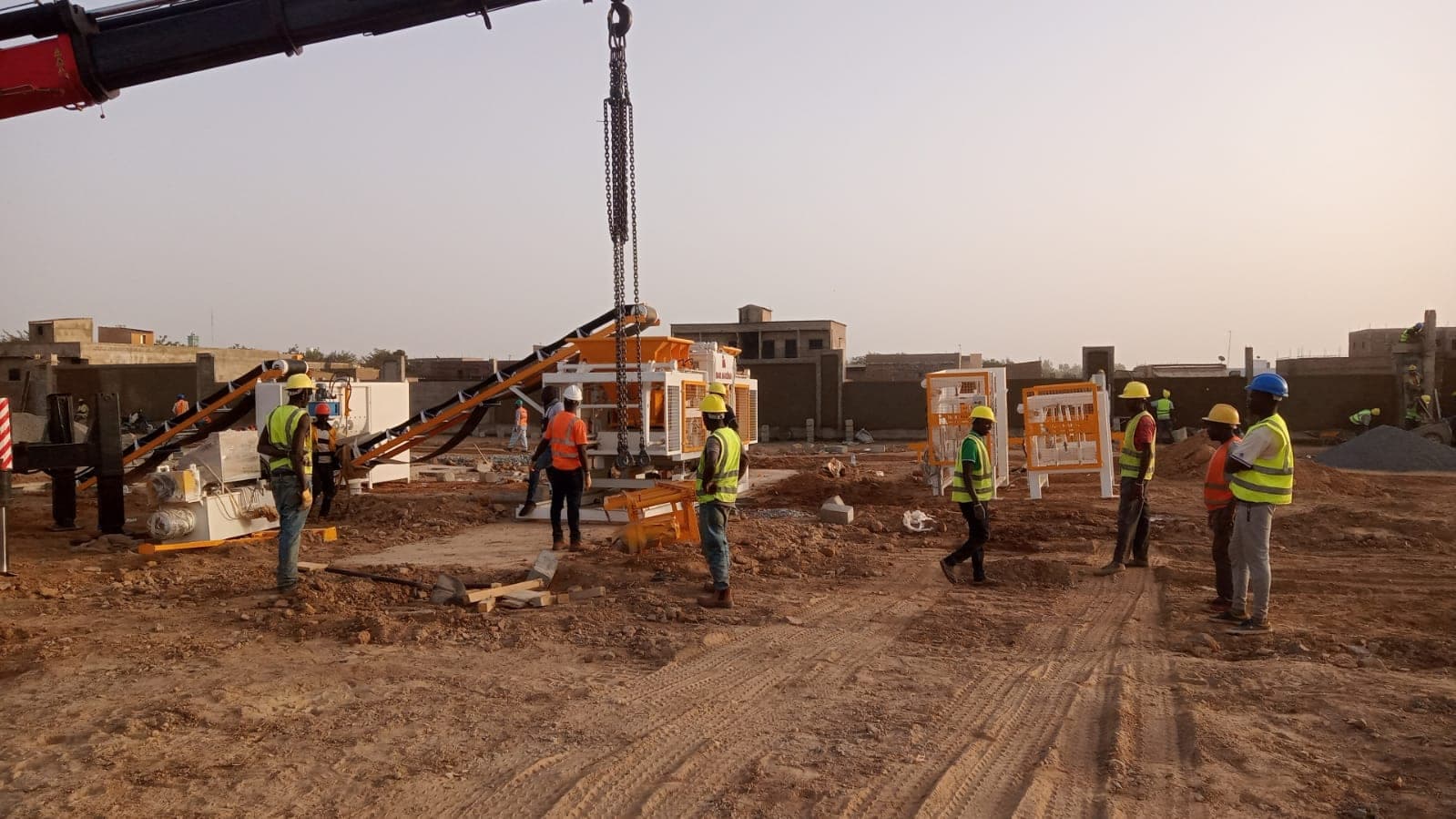
The machine is shipped by sea in a container to Lagos (Apapa or Tin Can Island) and transported by road to your site; your clearing agent handles customs. Every İBAR MAKİNA offer includes on-site installation and operator training: our team sets up the line and trains your operators on production, mould changes and daily maintenance. Machines carry a 2-year warranty, and spare parts are sent from stock by air cargo the same day. You can see how we deliver and install across the region in our East and West Africa guide.
9. Selling your blocks
Consistent size and strength win repeat buyers. Builders and developers order again from the yard that delivers on time, so plan delivery capacity early, keep enough cured stock for large orders, and offer paving stones and kerbs to estate developers once your block line is running smoothly.
Frequently asked questions
How much does it cost to start a block making business in Nigeria?
It depends mainly on daily capacity, automation level, the number of moulds and the plant equipment (mixer, conveyors, generator), plus land, shed and working capital. Send your target daily output on WhatsApp or through the quote form and we will send a complete offer for the machine and line.
Which block making machine is best for a new business?
Most new plants start with a semi-automatic machine producing 4,000–8,000 blocks a day, such as the CBM 12-2, BLOCKMASTER 4 or CBM 20-2. If you already have large buyers, the CBM 25 or a fully automatic CBM PRO line gives more output per worker.
Can I make 6-inch and 9-inch hollow blocks and interlocking paving stones on one machine?
Yes. By changing the mould, the same machine produces hollow and solid blocks, interlocking paving stones and kerbs. Moulds are made in the block sizes you sell.
Do you deliver and install in Nigeria?
Yes. We ship the machine by sea to Lagos and install it on your site with operator training included in the price.