




Contents
- Why is there no single concrete block mix ratio?
- Typical starting ratios for cement, sand, crushed stone and water
- How the components affect strength and surface quality
- Moisture control: Keeping the mix consistent throughout production
- How should admixture use and curing duration be planned?
- Quality control and mix development steps
- Frequently Asked Questions
The concrete block mix ratio directly affects a concrete block's strength, surface appearance and ability to retain its shape during production. However, achieving a quality product requires more than simply increasing the cement content. The particle size distribution of sand and crushed stone, the aggregate's current moisture content, accurate water calculations, compaction conditions and curing practices must all be considered together. The starting ratios provided in this guide are trial ranges reflecting general industry practice; they are not definitive production mix designs or guarantees of strength. The final mix must be validated through testing based on the raw materials used and the target product properties.
Why is there no single concrete block mix ratio?
Here, the term concrete block mix refers to the production mix for concrete blocks formed in a machine, not masonry mortar. This mix generally has a low water content and is suitable for compaction. A mix design used for manually poured, flowable concrete should not be applied directly to concrete block production. The product must remain intact after demoulding and achieve sufficient density.
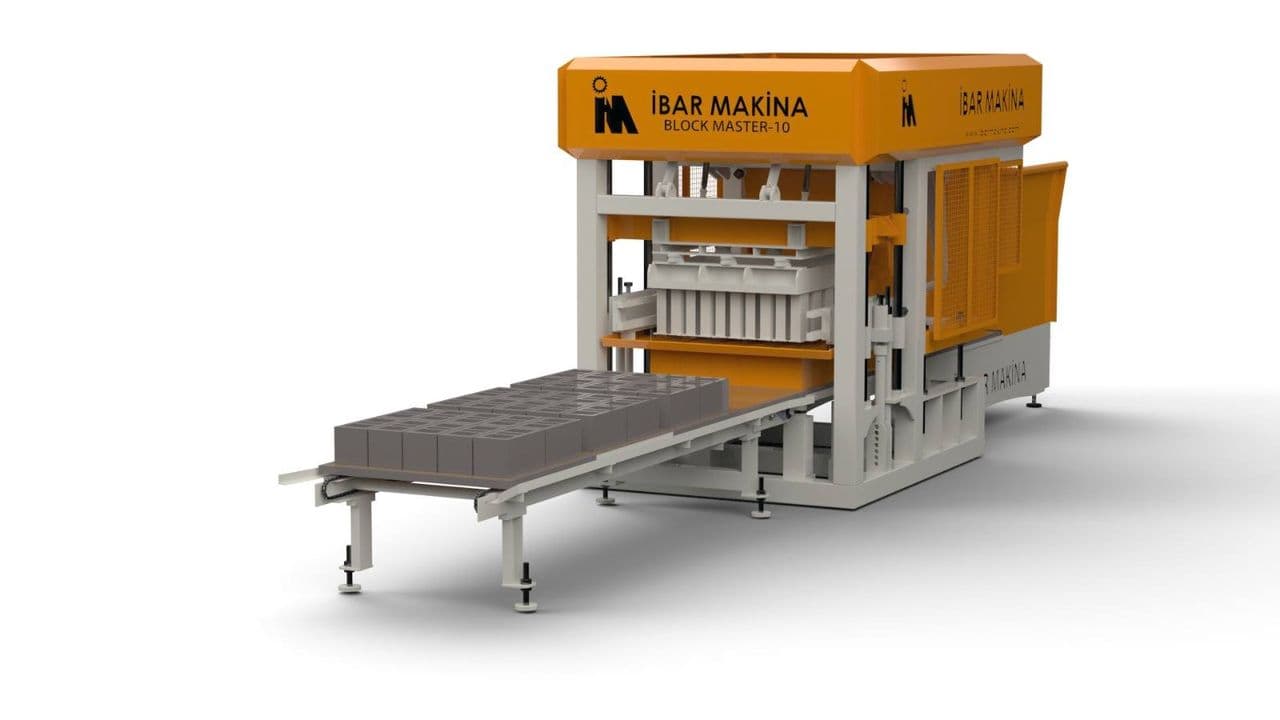
The same cement-to-aggregate ratio can produce different results with sand from different quarries. Aggregate angularity, water absorption, fines content and particle size distribution change the water demand. Mould geometry, the filling arrangement and vibration conditions also affect compaction. For this reason, the selection of a concrete block machine and the mix development process should not be considered independently.
Typical starting ratios for cement, sand, crushed stone and water
Defining ratios by mass is a more reliable approach for initial trials. Volumetric measurement using buckets or shovels can cause inconsistencies, particularly because the volume of damp sand changes. In general industry practice, approximately six to nine parts of total aggregate to one part of cement can be considered a starting trial range for some concrete block mixes using normal-weight aggregate. This range should not be applied directly to products using lightweight aggregate or requiring special performance.
| Component | Starting approach | Points to check |
|---|---|---|
| Cement | One part by mass is used as the reference. | Cement type, target strength and production conditions are assessed. |
| Total aggregate | Approximately six to nine parts is a trial range. | Particle size distribution, cleanliness and compactability are verified. |
| Sand and crushed stone | Their proportions are balanced within the total aggregate. | A distribution that reduces voids and a particle size suitable for the mould are sought. |
| Water | The quantity is determined with adjustments for aggregate moisture. | Effective water content, shape retention and compaction are monitored together. |
For example, solely to illustrate the trial approach, a mix containing 100 kilograms of cement and 700 kilograms of total aggregate could be considered. Of the total aggregate, 420 kilograms could be sand and 280 kilograms could be crushed stone of a suitable particle size. This distribution is not a universally recommended mix design; it is a starting example that must be adjusted through sieve analysis and product trials. Using only very fine sand as the fine aggregate, or crushed stone unsuitable for the mould cavities, can cause production problems.
For some semi-dry mixes, an effective water/cement ratio of approximately 0,30–0,45 may be considered a starting range for trials. However, this range does not apply to every aggregate, machine or product. The amount of water to be added directly to the mixer should not be calculated without distinguishing between water absorbed by the aggregate and free water carried on its surface. The water content should be determined in conjunction with mix compaction and test results.
How the components affect strength and surface quality
Cement content and aggregate distribution
Cement forms the paste that binds the aggregate particles together. Insufficient binder can increase the risk of edge chipping and low strength. However, increasing the cement content alone is not a solution; it can change water demand and shrinkage tendency. The aim is to find a balanced mix design that delivers the required performance. Cost assessment should also consider waste and the quantity of accepted products, rather than cement consumption alone.
Sand helps fill the voids between coarser particles. Suitable crushed stone contributes to the formation of the aggregate skeleton. Too much fine material can increase water demand, while insufficient fine material can cause surface voids and weak edges. The use of aggregate containing clay and harmful contaminants must also be assessed. Consistent particle size distribution helps achieve more consistent results from the same mix design.
Balancing water content and compaction
Excess water can cause the block to lose its shape after demoulding and result in a more porous structure after drying. Too little water can adversely affect cement hydration and mix compaction. In semi-dry production, a low water content does not always mean high strength. Voids remaining due to inadequate compaction can limit the expected strength gain.
Moisture control: Keeping the mix consistent throughout production
The moisture content of sand in an open stockyard can vary with rainfall, sunshine and stockpile depth. A mix that works correctly in the morning may behave differently in the afternoon, even when the same amount of water is added. This is why the water quantity specified in the mix design and the mix's total effective water content are not the same concept. Free water from the aggregate must be accounted for, and the weighed quantity of wet aggregate must also be adjusted to match the target dry material quantity.
- Measure aggregate moisture using representative samples; repeat the check after rainfall or changes in the stockpile.
- Do not confuse surface moisture with water absorption properties.
- Record the water added and any adjustments in the batch records.
- Use visual assessment and manual checks of the mix as supporting observations, not as substitutes for measurement.
- Keep mixing time and the material addition sequence consistent throughout the trials.
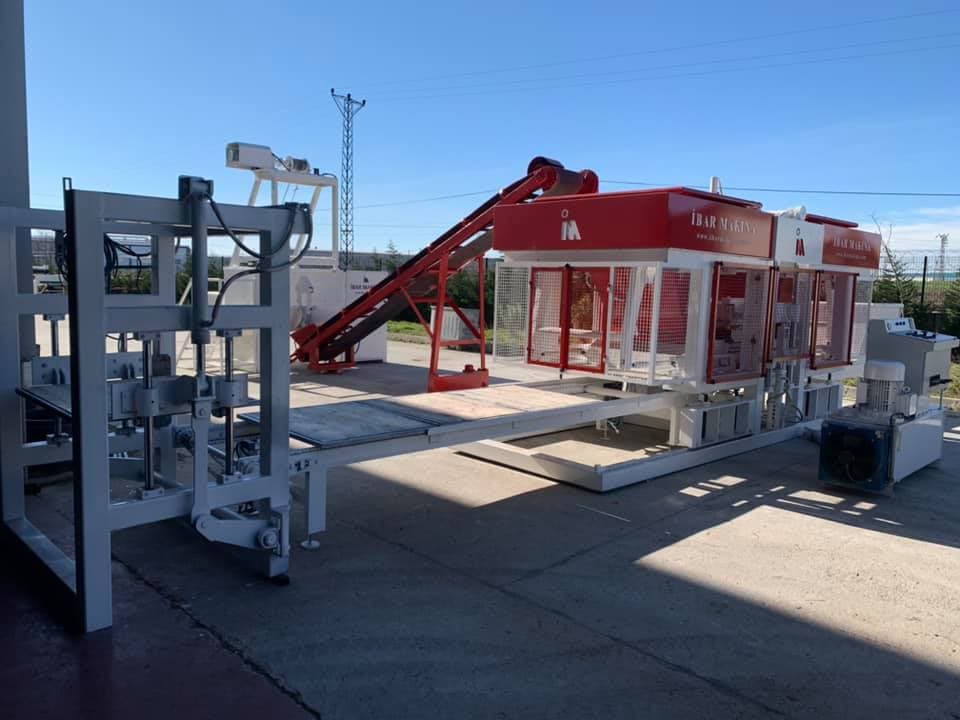
The batching and mixing arrangement helps ensure that raw materials are combined in the correct proportions. When assessing a concrete batching plant, the weighing arrangement, mixing requirements and integration of moisture control into the production flow should be considered together.
How should admixture use and curing duration be planned?
When selected appropriately, chemical admixtures can help improve mix compaction or production characteristics. However, not every admixture used for flowable concrete produces the same results in a semi-dry concrete block mix. The admixture type and dosage should be determined according to the manufacturer's technical information and through compatibility trials with the cement being used. Admixtures should not be viewed as a solution that compensates for poor aggregate distribution or inadequate curing.
The purpose of curing is to maintain the moisture and temperature conditions required for cement hydration. It is important to protect newly produced concrete blocks from direct sunlight, wind and rapid moisture loss. The curing method should be selected to avoid damaging the product, and decisions on early handling and stacking should be based on the strength the product has gained. Cold weather can slow strength development, while hot, dry conditions can accelerate moisture loss.
A 28-day strength assessment is a common reference for concrete; this does not mean that every product must be left outdoors for this period. Seven-day results can be useful for monitoring development, but they do not replace the final conformity assessment. Curing duration, shipment timing and testing age should be determined with consideration of the relevant product standard, climate and validated production process.
Quality control and mix development steps
Changing many variables at once during mix development makes it difficult to understand the cause of the results. During trials with a concrete block machine, the mix design, mould and compaction settings should be recorded. Products should be assessed not only for appearance, but also for the physical and mechanical properties required for their intended use.
- Record raw material sources, aggregate distribution and moisture values.
- Develop the initial mix design by mass and carry out controlled production trials.
- Monitor mould filling, edge integrity, dimensions and product mass.
- Apply the same curing conditions to the samples being compared.
- Check compressive strength, water absorption and other required properties using the relevant test methods.
- Revalidate the approved mix design whenever raw materials change.
Frequently Asked Questions
Is there a single ideal concrete block mix ratio?
No. Aggregate properties, target strength, product geometry and production conditions all affect the mix design. Starting ratios only provide a basis for the trial plan; a suitable mix is determined through measurement and testing.
Does more cement always produce stronger concrete blocks?
No. Increasing cement content may not deliver the expected result if the balance of water and aggregate is not maintained. Inadequate compaction or unsuitable curing also limits strength. The mix design must be assessed as a whole.
Is clean demoulding enough to confirm product quality?
No. A uniform appearance is a positive production indicator, but it does not demonstrate properties such as strength and water absorption. Quality decisions should be supported by test results from properly cured samples.
What information should be shared when selecting a production line?
You should provide the dimensions of the concrete blocks to be produced, target production volume, available raw materials, site conditions and automation requirements. İBAR MAKİNA is a manufacturer that has been producing machinery in Çerkezköy, Tekirdağ, since 1978 and exports to more than 30 countries. To discuss a configuration suited to your needs and obtain pricing based on the scope of supply, you can complete the quotation form.