



Contents
- What is a box culvert and how does it work?
- Box culvert applications in infrastructure
- How are box culvert dimensions determined?
- Key stages of precast box culvert production
- Key considerations when selecting moulds and box culvert machines
- Production facility and investment planning
- Frequently Asked Questions
In infrastructure projects, the question what is a box culvert involves more than defining a concrete element: it also concerns conveying water safely and protecting the road structure. A box culvert is an enclosed passage structure with a square or rectangular cross-section, usually designed in reinforced concrete. It can be used for water crossings beneath roads, stormwater drainage and stream crossings. In precast production, elements are manufactured under controlled factory conditions, then installed on site according to the project's layout and joint details. The right solution is determined by assessing hydraulic calculations, ground conditions, traffic loads, mould design and the production method together.
What is a box culvert and how does it work?
A box culvert provides a passage for water through a cross-section formed by a top slab, base slab and side walls. The reinforced concrete design accounts for the fill and traffic loads above the structure. The shape and dimensions of the cross-section are selected according to the volume of water to be conveyed, flow conditions and existing ground levels. A culvert should therefore be treated not simply as a ready-made concrete product, but as a component of an infrastructure system that requires engineering calculations.
The main difference between a circular concrete pipe and a box culvert is their cross-sectional geometry. In certain projects, a box section can provide a wide flow opening within a limited height. However, the most suitable cross-section cannot be determined from appearance or dimensions alone. Inlet and outlet conditions, gradient, sediment transport, maintenance access and structural requirements must be assessed together.
Box culvert applications in infrastructure
Water crossings beneath roads
When a highway, access road or internal site road interrupts natural water flow, the water must be conveyed beneath the road embankment in a controlled manner. A box culvert can provide this passage. In addition to road loads, the design must consider fill height, foundation bearing capacity and compaction conditions around the culvert. Proper inlet and outlet arrangements help control scour that the flow may cause in the surrounding area.
Stormwater collection and drainage lines
Surface runoff from rainfall in residential areas, industrial zones and large paved areas must be drained in a controlled manner. Box culverts can form part of stormwater conveyance lines in suitable projects. Cross-section selection considers both the current flow rate and anticipated developments within the project. Cleaning and maintenance requirements should not be overlooked during design, as they directly affect the line's performance throughout its operating life.
Stream and natural drainage crossings
A box culvert solution may be considered where a stream channel intersects a road or another infrastructure route. Flood flow rates, transported debris, the risk of blockage and the effects of flow on the surrounding environment are key factors. A culvert may not be suitable for every stream crossing; some conditions require different crossing structures. The selection should follow the relevant project criteria and a qualified engineering assessment.
How are box culvert dimensions determined?
The first distinction in box culvert dimensions is between the clear internal opening and external dimensions. The clear internal opening defines the area through which water can pass, while external dimensions also include wall and slab thicknesses. This distinction must be clearly specified when ordering and preparing moulds. Element length, joint geometry, reinforcement layout and lifting details must also be defined separately from the cross-sectional dimensions.
| Example cross-sectional dimensions | Details to specify during design |
|---|---|
| 2000x2000 mm | Whether the dimensions refer to the clear internal opening or external dimensions, wall thickness and element length |
| 3000x2000 mm | Width and height orientation, hydraulic requirements and reinforcement layout |
| 3000x3000 mm | Cross-section definition, structural loads, lifting and transport conditions |
These dimensions are examples of cross-sections that can be used in project discussions; on their own, they do not guarantee a specific flow capacity or load-bearing strength. Two culverts with the same opening may have different reinforcement and wall thicknesses. Likewise, machine selection cannot be based solely on cross-sectional width. The target product geometry, production equipment and mould configuration must be verified together.
Key stages of precast box culvert production
Precast production enables repeated elements to be manufactured through a controlled process. However, product quality does not depend on the machine alone. The concrete mix, reinforcement placement, mould accuracy, compaction and curing must be managed as an integrated process. Checks against the project specifications at every stage also help make on-site installation more predictable.
- Project and product definition: The cross-section, element length, wall and slab thicknesses, reinforcement and joint details are specified. Production drawings are coordinated with the mould design.
- Mould preparation: Mould surfaces are cleaned, connections are checked and a suitable release agent is applied. Any wear or deformation that could affect dimensional accuracy is inspected.
- Reinforcement placement: The prepared reinforcement is placed in its specified position. Spacers that maintain concrete cover and the required fixing arrangements are checked.
- Concrete feeding and compaction: Concrete suitable for the production method is fed into the mould. Feeding and compaction are managed to reduce the formation of voids within the cross-section.
- Demoulding and curing: The product is removed from the mould at an appropriate stage for the method used and the condition of the concrete. Curing conditions are arranged to support the required strength development.
- Inspection and shipment: Dimensions, surface condition, joint areas and the required quality records are checked. Lifting, stacking and transport are carried out in accordance with the product design.
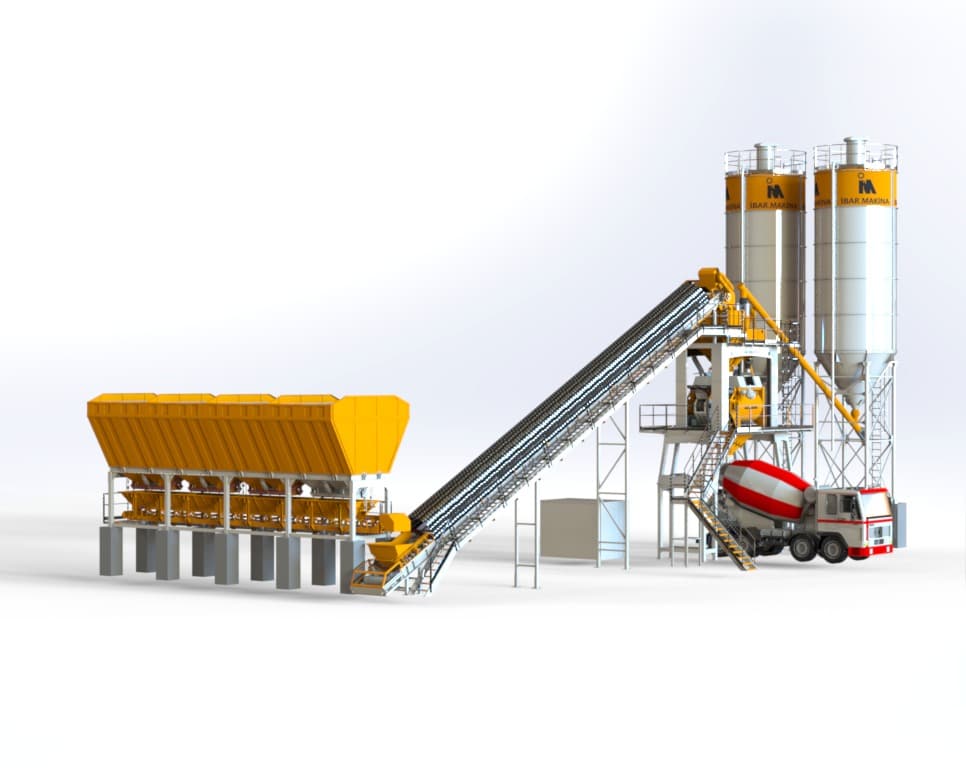
Compatibility between the concrete preparation system and the production line is also important. Aggregate properties, mix uniformity and a consistent concrete supply affect production continuity. During plant planning, concrete batching plant options should be assessed alongside the requirements of the culvert production line and the site layout.
Key considerations when selecting moulds and box culvert machines
The mould is the main production component that determines product geometry. The fit between the internal and external mould sections, surface evenness, corner details and joint areas are reflected in the finished product. Mould design must provide not only easy demoulding, but also rigidity and repeatable dimensional accuracy. If production of different cross-sections is planned, mould changeovers, storage space and the equipment required for changeovers should be assessed in advance.
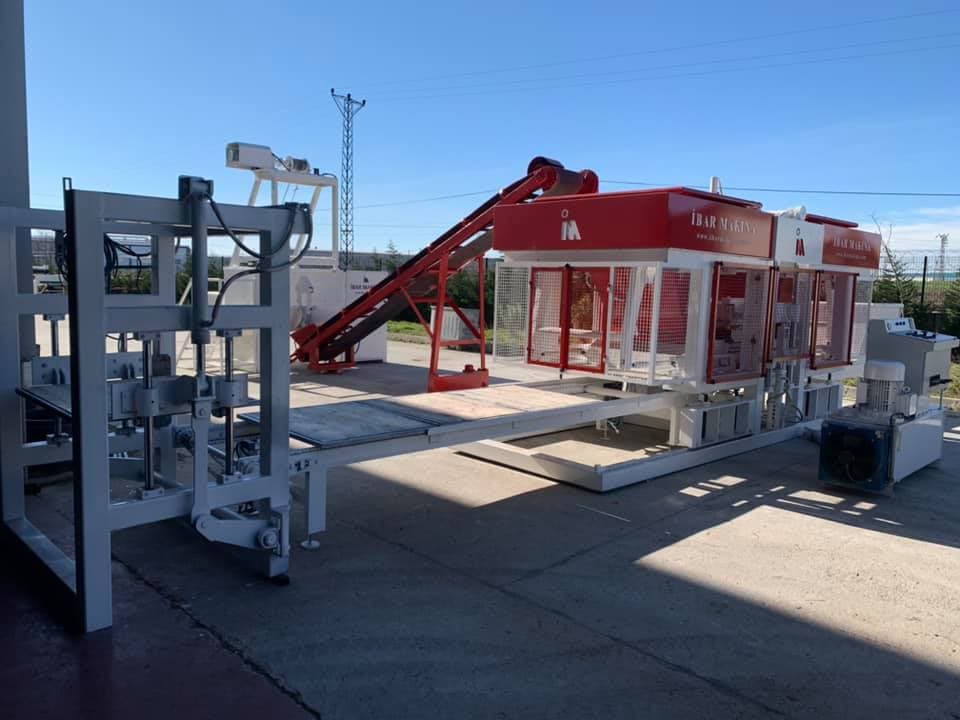
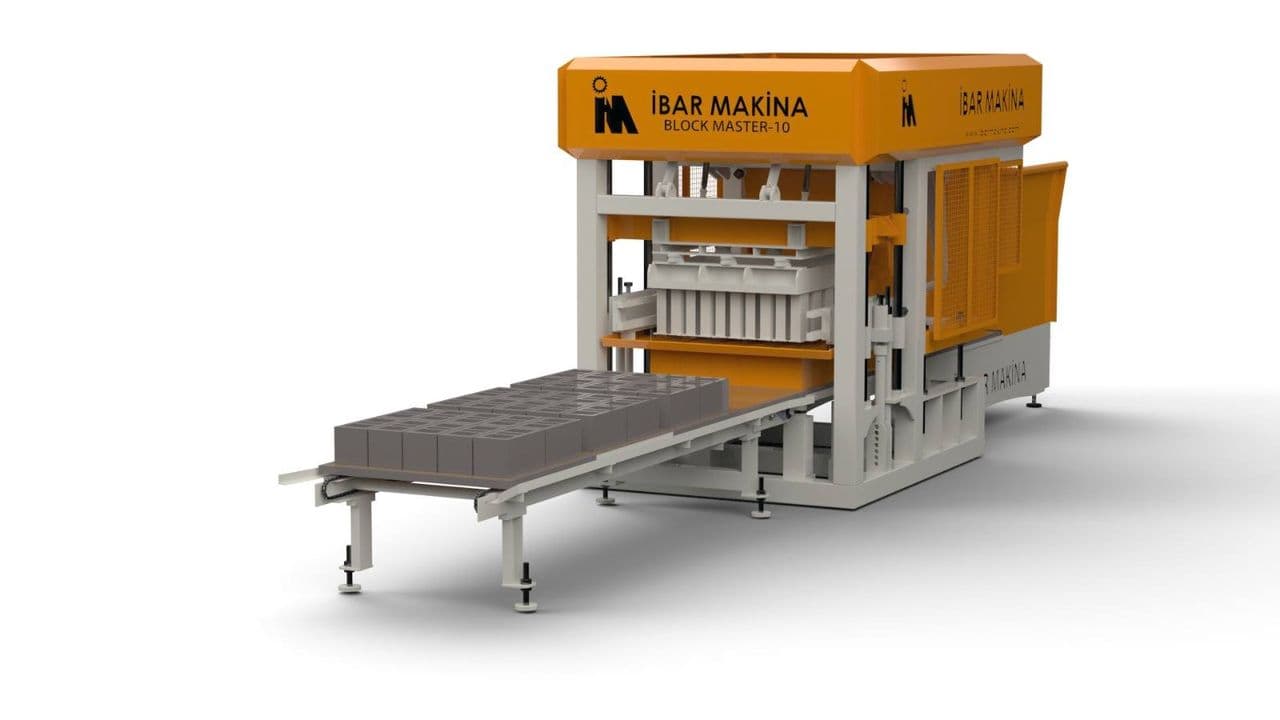
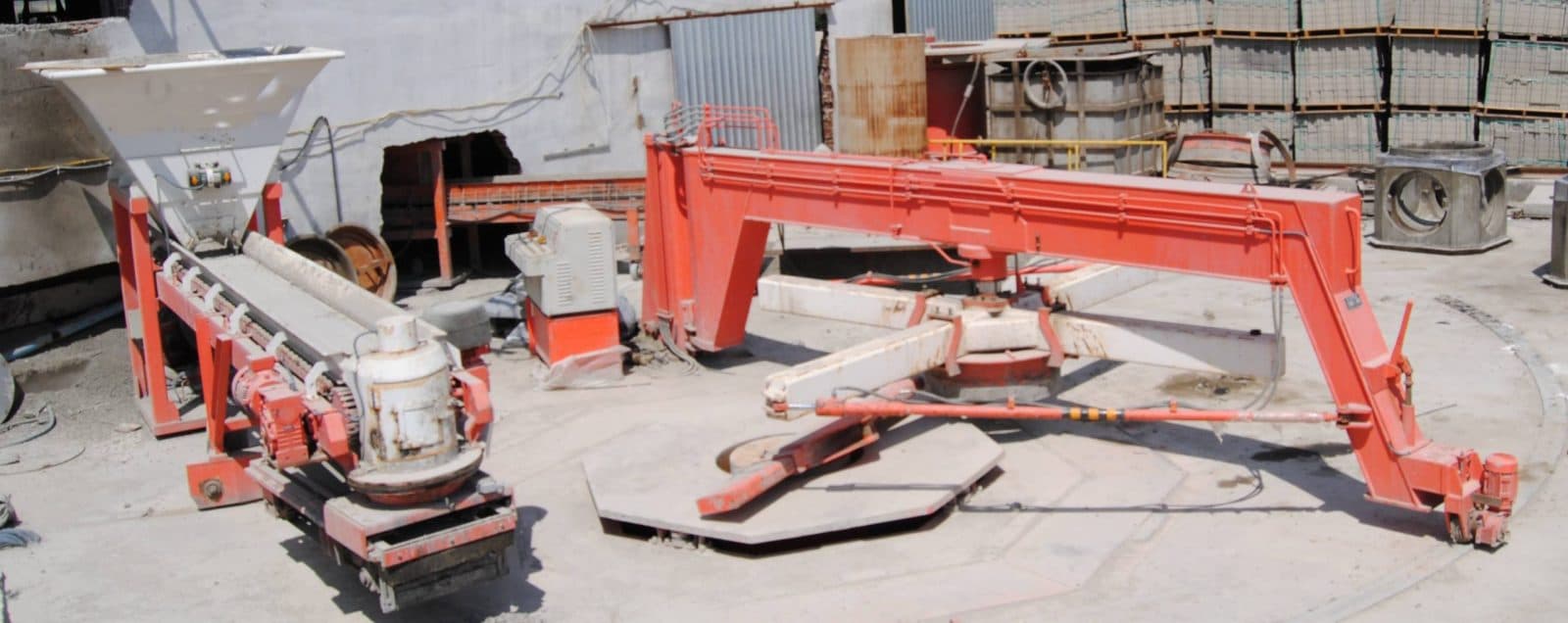
Machine selection should consider the target cross-sections, concrete feeding arrangement, compaction method and product handling system together. İBAR MAKİNA's models for box culvert production within its concrete pipe machine product range can be reviewed according to the required product range. When comparing models, it is necessary to verify the suitable mould and production configuration as well as dimensional limits.
CPM 2400 can be considered for producing box culverts up to 2000x2000 mm. CPM 3600 is an option for producing box culverts up to 3000x3000 mm. For example, if a 3000x2000 mm cross-section is required, the mould and production details for that product should be discussed separately. Maximum dimension specifications should not be interpreted as meaning that all intermediate cross-sections can be produced directly using the same equipment.
Production facility and investment planning
Facility planning should account for reinforcement preparation, concrete feeding, curing, storage and shipment areas, as well as the machine footprint. Lifting and handling arrangements are important for moving large-section products within the facility. Purchasing decisions should consider not only the initial cost, but also the range of moulds, maintenance access, operator requirements and production flow.
When preparing for a project discussion with İBAR MAKİNA, which has been manufacturing in Çerkezköy, Tekirdağ since 1978 and exports to more than 30 countries, it is helpful to share the target cross-sections, element lengths and planned product types. As machine and mould prices vary according to configuration, a project-specific quotation should be requested once the technical requirements have been clarified.
Frequently Asked Questions
Are box culverts and concrete pipes used for the same purpose?
Both can be used in suitable projects to convey water or carry it beneath roads. However, their cross-sectional geometries differ. The choice is made through engineering calculations based on flow rate, available height, ground conditions, structural loads and maintenance requirements.
Is a 3000x2000 mm box culvert a standard production option?
This dimension can be specified as a project cross-section, but it should not be assumed to be a ready-made option for every manufacturer or mould system. Machine and mould suitability must be verified by specifying the clear internal opening, wall and slab thicknesses, element length and reinforcement details.
Is a machine alone sufficient for precast box culvert production?
No. Suitable moulds, reinforcement preparation, concrete supply, a curing area, quality control and handling equipment are also required. All components of the production line must be planned to match the target product specifications and facility conditions.
How can I request a quotation for a box culvert production line?
You can start by sharing your target product dimensions, element lengths, product types and facility conditions. To discuss the machine and mould configuration suitable for your project, you can complete İBAR MAKİNA's quotation request form.