



Contents
- Our machines in East and West Africa
- Country by country: ports and what we have done
- What a block factory in the region usually produces
- Which block making machine should you choose?
- More than blocks: pipes and concrete for infrastructure
- Power, raw materials and space
- Delivery, installation and support
- Frequently asked questions
From Lagos and Accra to Nairobi, Kampala and Dar es Salaam, most new houses, shops and boundary walls are built with concrete blocks — hollow sandcrete blocks in West Africa, concrete blocks and paving blocks (known as cabro in Kenya) in East Africa. This guide explains how to choose a block making machine for Nigeria, Ghana, Sierra Leone, Kenya, Uganda, Tanzania, Zambia or Zimbabwe, how the machine reaches your site, and where İBAR MAKİNA machines are already working in the region.
Our machines in East and West Africa
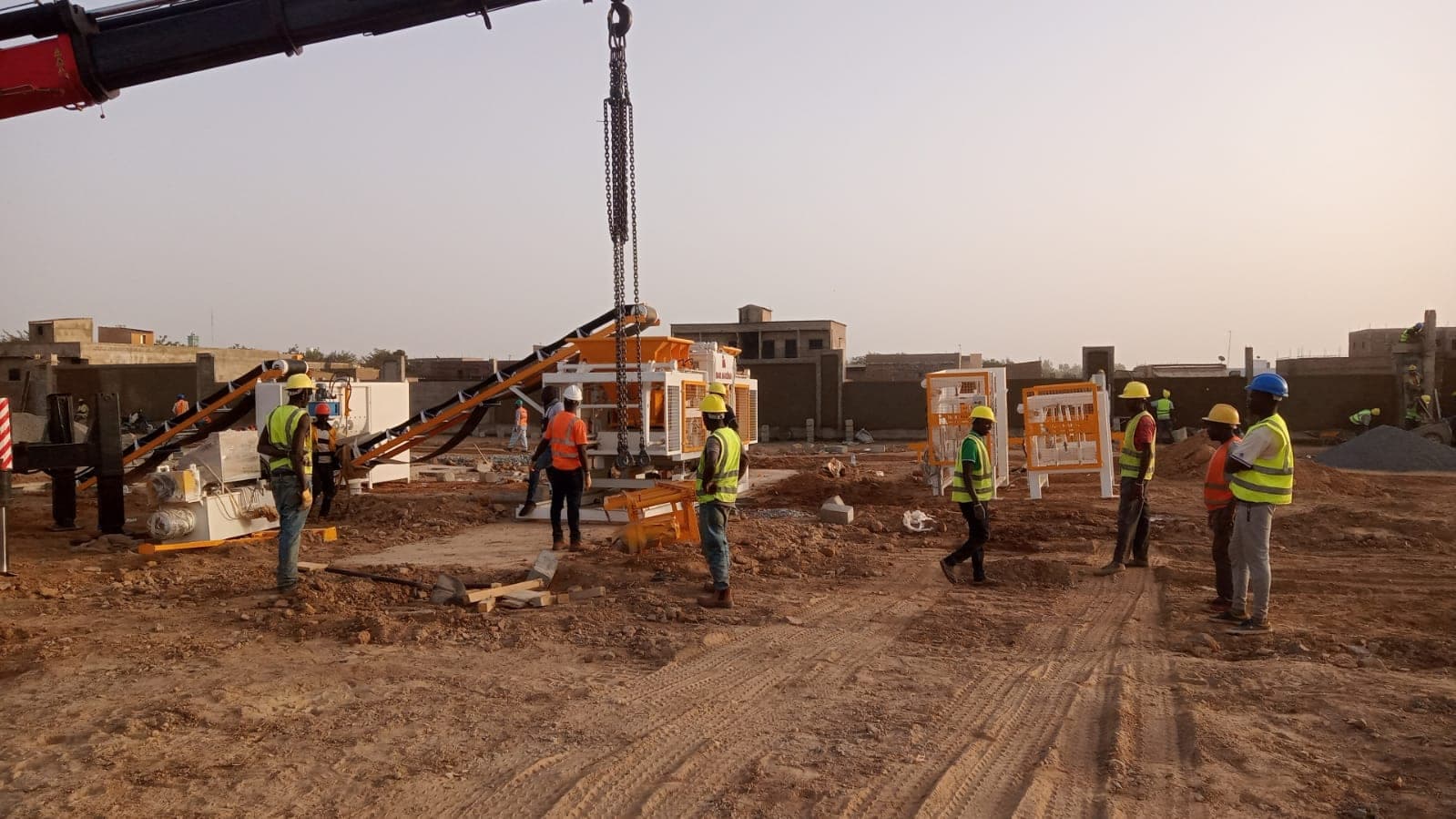
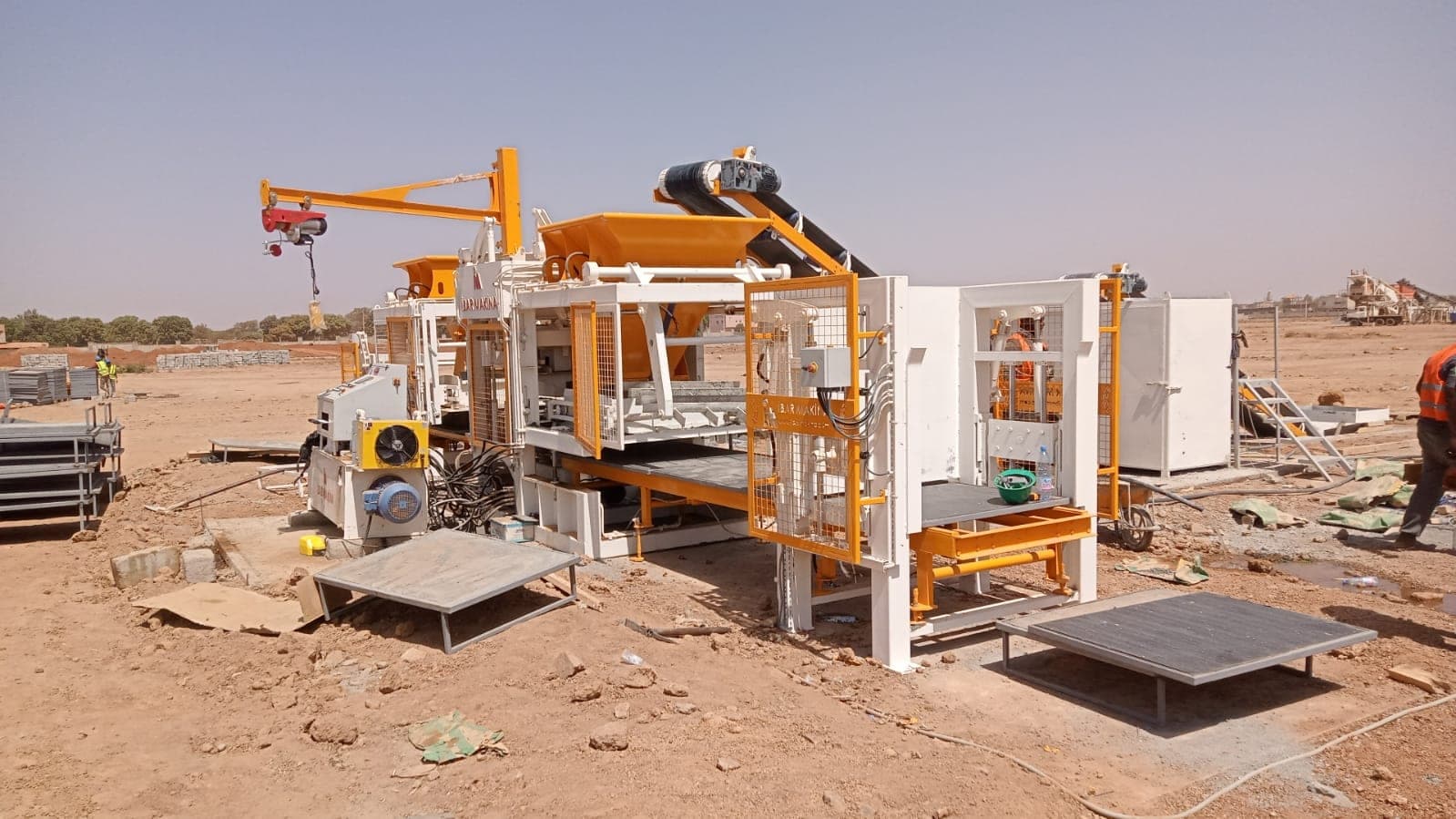
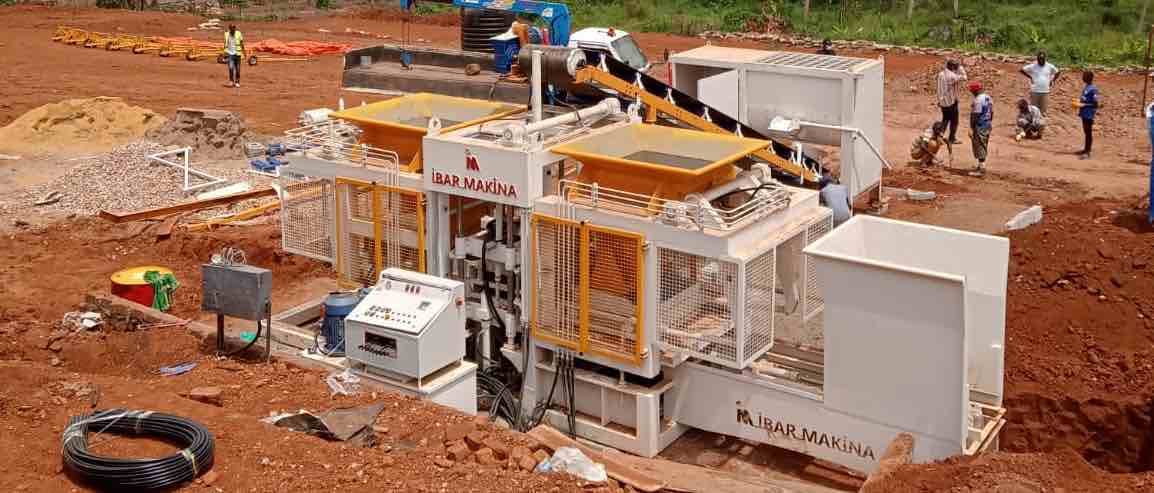
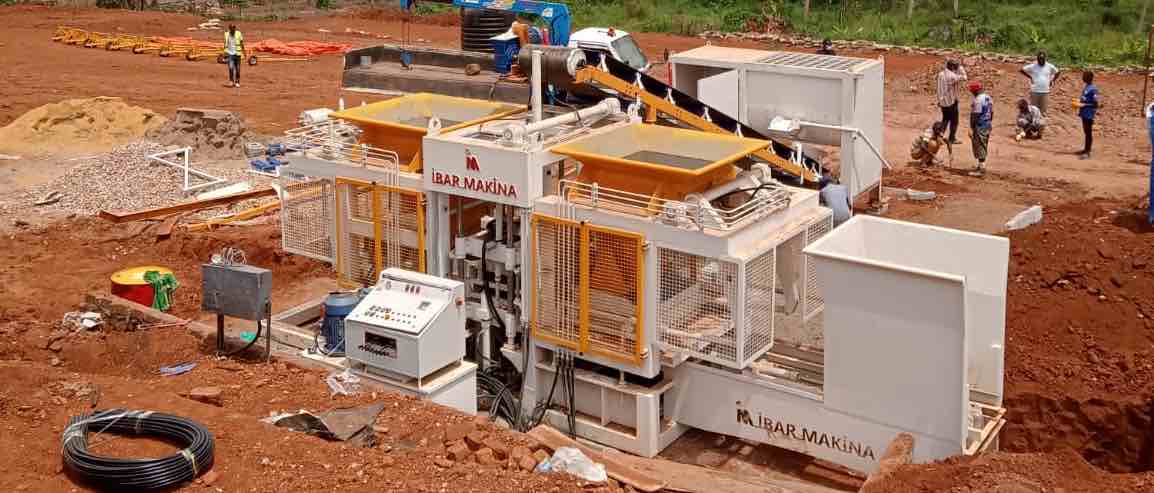
- Uganda: CBM 20-2 double-hopper block machine installed in Kampala — 8,000 blocks of 20 cm or 10,000 blocks of 15 cm a day. See our page on block making machines in Uganda.
- Ghana: CBM 20-2 shipped to SKY GLOBAL CONSTRUCTION, and our stand at Ghana Build 2019 in Accra. See block making machines in Ghana.
- Sierra Leone: CBM 12 shipped in a container from our factory. See block making machines in Sierra Leone.
- South Sudan: CPM 1600 PRO concrete pipe machine and MOBIL MIX 30 concrete batching plant installed.
- Zimbabwe: CPM 1400 PRO concrete pipe machine shipped for road and drainage projects.
- Ethiopia: we exhibited at ETHIOCON 2019 in Addis Ababa.
Country by country: ports and what we have done
Every machine leaves our factory in Türkiye by sea in a container. Coastal countries receive it at their main port; landlocked countries are served by road from the nearest port.
| Country | Usual port of entry | İBAR MAKİNA in the country |
|---|---|---|
| Nigeria | Lagos (Apapa, Tin Can) | Delivery and on-site installation on request |
| Ghana | Tema | CBM 20-2 shipped; Ghana Build exhibitor |
| Sierra Leone | Freetown | CBM 12 shipped |
| Kenya | Mombasa | Delivery and on-site installation on request |
| Uganda | By road from Mombasa | CBM 20-2 installed in Kampala |
| Tanzania | Dar es Salaam | Delivery and on-site installation on request |
| Zambia | By road from Dar es Salaam | Delivery and on-site installation on request |
| Zimbabwe | By road from Beira or Durban | CPM 1400 PRO concrete pipe machine shipped |
| South Sudan | By road from Mombasa | CPM 1600 PRO and MOBIL MIX 30 installed |
What a block factory in the region usually produces
- Hollow blocks for walls — the best-selling product in almost every market.
- Solid blocks for foundations, load-bearing walls and fences.
- Paving blocks and kerbs for driveways, compounds, petrol stations and roads.
All of these are made on the same machine by changing the mould, and moulds are produced in the block sizes you sell in your local market. Double-hopper models also produce two-layer coloured paving blocks.
Which block making machine should you choose?
- Starting out (about 4,000 blocks of 20 cm a day): CBM 12-2 with double hopper for coloured pavers, BLOCKMASTER 4, or the MBM4 egg-laying machine, which moves along a concrete floor and lays the blocks directly on it, without pallets.
- Medium output (about 8,000 a day): CBM 20-2 — the model running in Kampala — or BLOCKMASTER 8.
- Higher output (about 10,000 a day): CBM 25 or BLOCKMASTER 10.
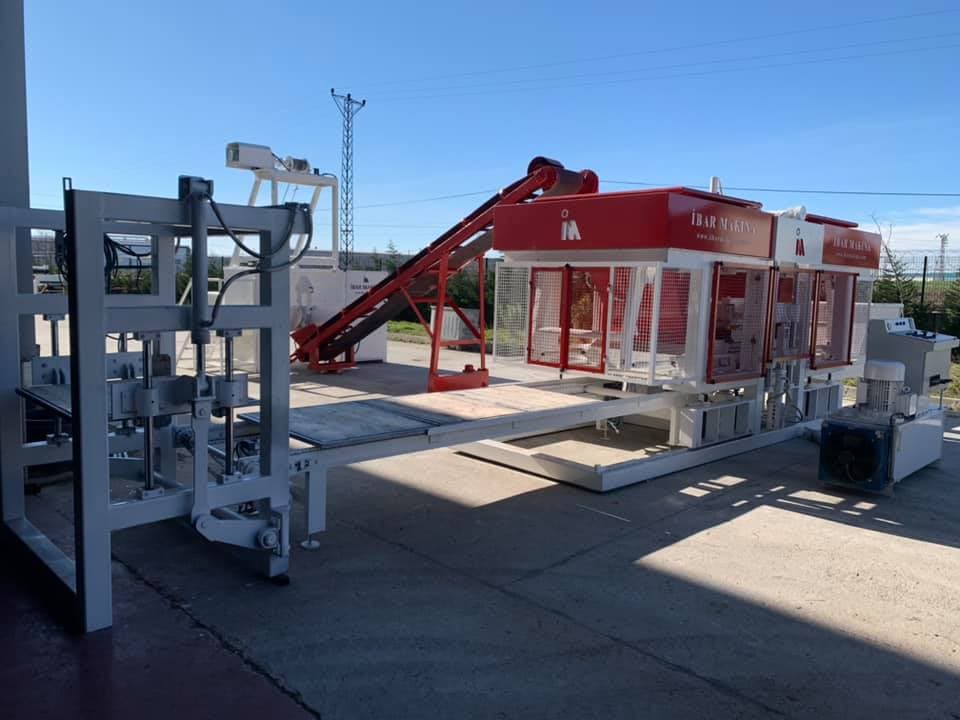
- Large projects: fully automatic, PLC-controlled CBM 25 PRO (10,000–12,000 blocks a day) and CBM 36 PRO (15,000–18,000 blocks a day); stone collecting and stacking robots are optional and recommended for fully automatic production.
Compare all models on our block making machine page, or read semi-automatic vs fully automatic block machines and our daily capacity calculation guide.
More than blocks: pipes and concrete for infrastructure
Road, drainage and housing projects across the region also need culverts, concrete pipes and ready-mixed concrete. That is why customers in South Sudan and Zimbabwe chose our concrete pipe machines: producing heavy pipes close to the job site saves long, expensive haulage. A compact plant such as the MOBIL MIX 30 (30 m³ of concrete an hour) can supply both the pipe machine and a block machine on the same site.
Power, raw materials and space
Where grid power is unreliable, most block factories run on a diesel generator; our quote lists the power of every unit so you can size it correctly. Blocks are made from cement, sand, aggregate and water, and the mix ratio and moisture decide their strength — see our guide on concrete block mix proportions. Plan enough covered or shaded space for curing, because fresh blocks must not dry out in direct sun during the first days. On semi-automatic lines without a stacking robot, fresh blocks are moved to the curing area on their pallets with a pallet trolley.
Delivery, installation and support
Every İBAR MAKİNA offer includes on-site installation and operator training. Our team sets up the machine at your plant and trains your operators on production, mould changes and daily maintenance. Machines carry a 2-year warranty, and spare parts are sent from stock by air cargo the same day. The delivery time depends on the order date and the factory workload; we confirm it in your quote, together with the sea freight to your port.
Frequently asked questions
How much is a block making machine in Nigeria, Kenya or Ghana?
The price depends on daily output, automation level, moulds and equipment such as the mixer, conveyors and generator. Installation and training are included. Our article on block making machine prices explains each cost item; for an exact price, send your target capacity on WhatsApp or through the quote form.
Do you deliver to Nigeria, Kenya, Tanzania and Zambia?
Yes. We ship to any port in East and West Africa, and by road to landlocked countries, then install the machine on your site and train your operators. For Nigeria, see our step-by-step guide to starting a block making business in Nigeria.
Can one machine make hollow blocks and paving blocks?
Yes. By changing the mould, the same machine produces hollow and solid blocks, paving blocks and kerbs; double-hopper models also make coloured paving blocks.
Which machine is best for a first block factory?
Most new factories start with a semi-automatic machine producing 4,000–8,000 blocks a day, such as the CBM 12-2, BLOCKMASTER 4 or CBM 20-2. If you already have regular buyers, a CBM 25 or a fully automatic CBM PRO line gives more output per operator.