



Contents
- The Key Difference Between Semi-Automatic and Fully Automatic Systems
- Labour: Semi-Automatic and Fully Automatic Concrete Block Machines
- Assess Capacity at Both Machine and Line Level
- Investment Cost and Operating Expenses
- PLC Control, Maintenance and Stacking Robots
- Which System Suits Your Business? Decision Table
- Frequently Asked Questions
When choosing between a semi-automatic and fully automatic concrete block machine, daily production capacity alone is not enough. Labour requirements, concrete preparation, pallet circulation, maintenance planning and product stacking must be assessed together. The right choice is not to buy the highest level of automation, but to establish a production line that suits your order volume, workforce and investment plan.
Manufacturing in Çerkezköy, Tekirdağ since 1978 and exporting to more than 30 countries, İBAR MAKİNA produces machines and moulds for concrete block and paving stone production. This comparison explains which technical questions to ask before investing and how different levels of automation can affect your operations.
The Key Difference Between Semi-Automatic and Fully Automatic Systems
In semi-automatic production, certain machine movements take place within a controlled cycle, while some feeding, handling or stacking operations may require operator assistance. However, the term semi-automatic does not describe the same equipment scope across all manufacturers and configurations. The quotation should therefore clearly identify which operations are automatic and which are manual.
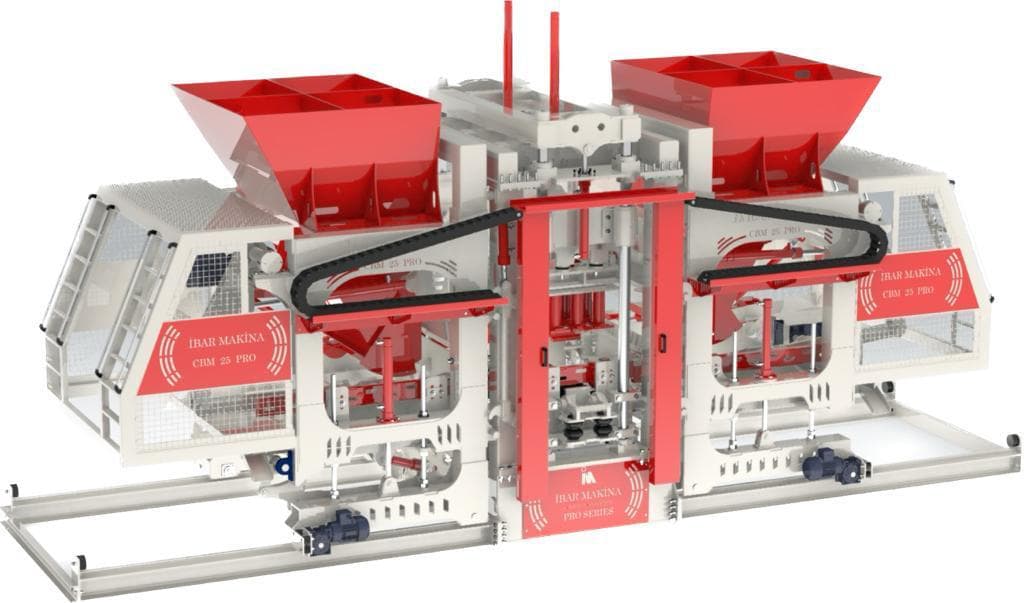
Fully automatic systems aim to manage production stages through a more integrated control system. However, an automatic concrete block machine does not mean that the entire plant, including concrete preparation and finished product stacking, is automatically operated. The scope of mixers, handling systems, pallet feeding and stacking equipment included in the quotation must be reviewed separately.
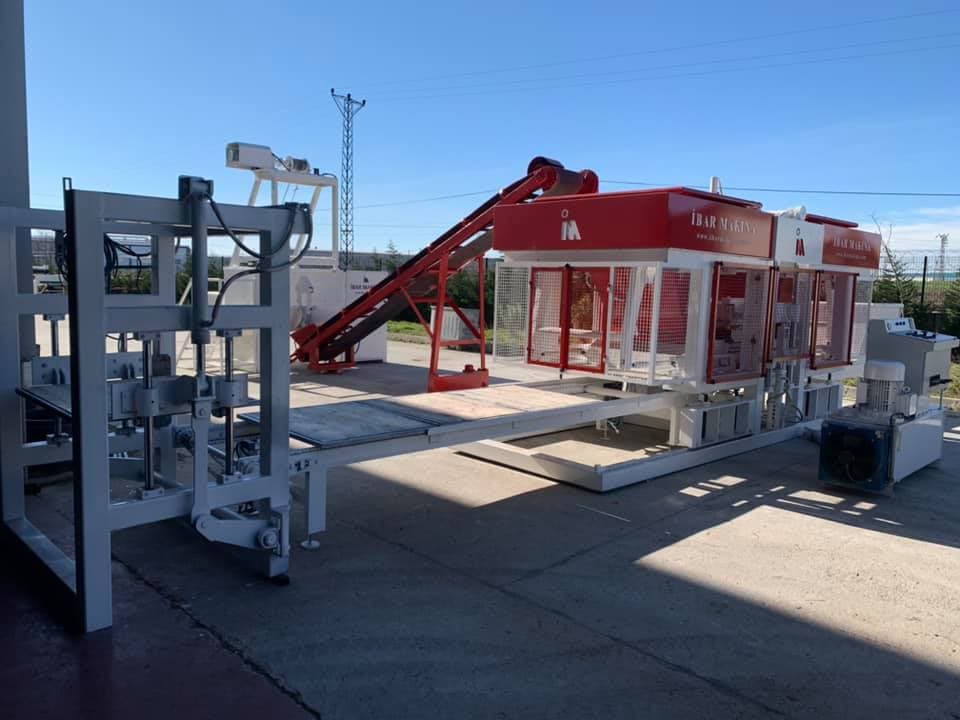
When assessing your initial options, you can compare the semi-automatic concrete block machine and automatic concrete block machine categories. Clearly defining where the line starts and ends is just as important as the model name.
Labour: Semi-Automatic and Fully Automatic Concrete Block Machines
On a semi-automatic line, the operator may play a more direct role in the production flow. Tasks such as moving pallets, removing products from the production area or preparing for stacking may require manual intervention. Calculating staffing needs based only on the employee operating the machine can underestimate the actual labour requirement.
With suitable equipment, a fully automatic line can reduce manual handling and repetitive tasks. However, the operator's role does not disappear; process monitoring, mix recipe control, quality monitoring and initial fault response become more important. Automation changes both staffing requirements and the skills needed.
- When choosing semi-automatic production: Assess task allocation, operator experience and a sustainable working pace throughout the shift.
- When choosing fully automatic production: Plan control system training, technical maintenance capabilities and procedures for responding to line stoppages.
- For both systems: Plan staffing for cleaning, product inspection, mould changes and safe operation.
A precise staffing figure should not be provided without knowing the layout and equipment scope. Requesting a task-based labour plan at the quotation stage makes it easier to compare different systems using the same criteria.
Assess Capacity at Both Machine and Line Level
The number of products made per cycle and daily production capacity are different measures. Actual daily output is affected by product dimensions, concrete mix, continuity of feeding, operating time, stoppages and product handling arrangements. Capacity comparisons should therefore be based on the same product and operating conditions.
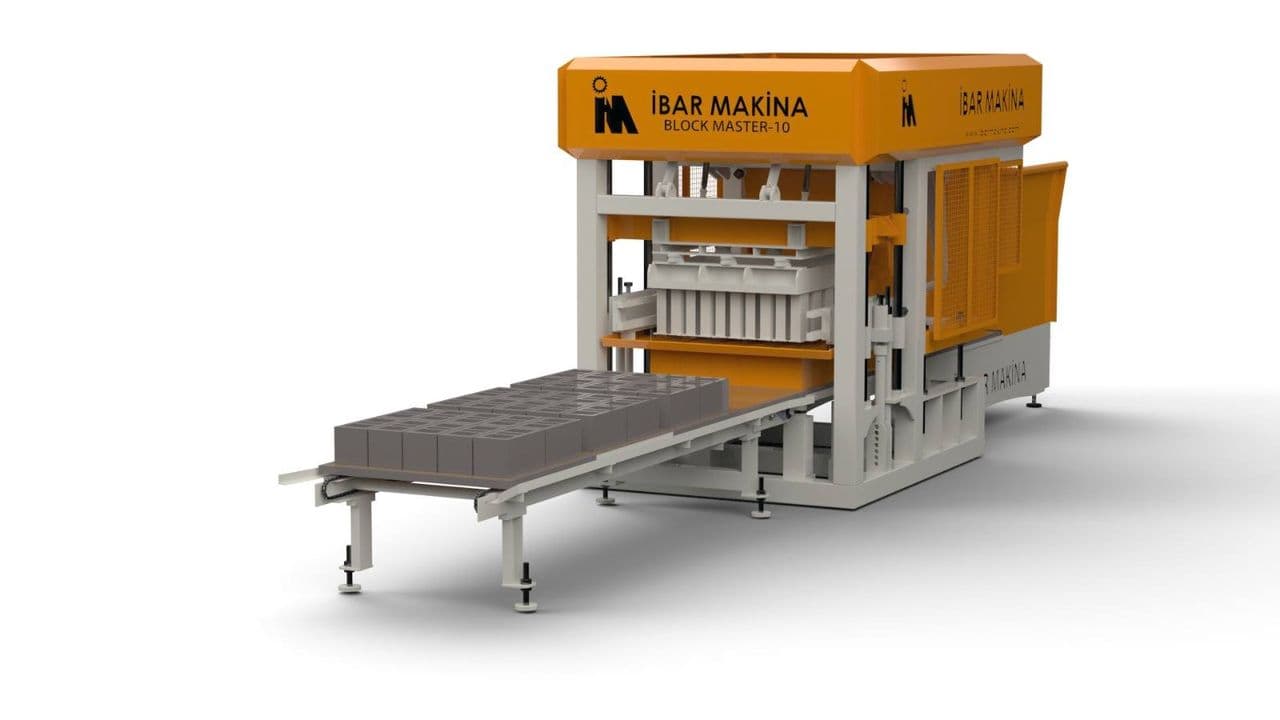
İBAR MAKİNA's product information specifies a capacity of 4.000 pieces per day and 4 pieces per cycle for BLOCK MASTER 4 when producing 200x400x200 mm concrete blocks. BLOCK MASTER 8 is listed at 8.000 pieces per day and 8 pieces per cycle; BLOCK MASTER 10 at 10.000 pieces per day and 10 pieces per cycle. The stated daily capacity of the BLOCKMASTER 10 S automatic concrete block machine is 12.000 pieces.
These figures help compare models; they should not be interpreted as meaning that the same daily output can be achieved with different products. Even if the machine has a high capacity, the complete line may not reach the same production rate if concrete preparation or product handling capacity is insufficient.
Investment Cost and Operating Expenses
Semi-automatic systems may be considered by businesses looking to manage their initial investment with a more limited range of auxiliary equipment. In fully automatic lines, control, handling and stacking equipment can expand the scope of the investment. However, considering only the initial purchase price leaves the long-term cost comparison incomplete.
Total cost calculations should include labour, energy, maintenance, consumables, pallet requirements and production stoppages. Expected sales volume and a realistic capacity utilisation rate must also be taken into account when assessing cost per product. If demand is low, a significant portion of a high-capacity line may remain unused.
- Compare machines, moulds and auxiliary equipment on an equivalent scope.
- Identify installation space, floor requirements, electrical infrastructure and handling needs.
- Budget for maintenance and staff training alongside the initial investment.
- If future capacity expansion is planned, ask about equipment compatibility in advance.
Concrete block machine prices vary by configuration. For a reliable quotation comparison, provide product dimensions, target output, automation scope and stacking requirements in the same technical specification.
PLC Control, Maintenance and Stacking Robots
What Does PLC Control Provide?
A PLC is an industrial control system that manages machine movements according to defined sequences and conditions. A properly configured system can simplify cycle monitoring and parameter management. However, the presence of a PLC alone does not mean that every stage of the line is automated.
The quotation should explain the operator interface functions, adjustable parameters, alarm notifications and user permissions. Features such as recipe storage or remote support should not be assumed; their availability in the relevant configuration must be confirmed.
How Does the Maintenance Plan Change?
In both systems, the mould, vibration system, hydraulic components and moving parts require regular inspection. As the scope of automation increases, sensors, the electrical panel and control components also become part of the maintenance plan. More automation does not eliminate maintenance requirements; it changes the nature of the maintenance work.
Maintenance intervals should follow the manufacturer's instructions, and operator training and a critical spare parts plan should be prepared. Safe shutdown procedures must be applied during cleaning and maintenance, and uncontrolled access to moving equipment must be prevented.
When Should a Stacking Robot Be Considered?
A stacking robot can be considered to automate repetitive product handling and stacking tasks in a suitable line layout. For businesses with high, consistent production volumes, it can help reduce the bottleneck caused by manual stacking. However, it should not be assumed to be included as standard in every automatic machine quotation.
Product weight, stacking pattern, pallet type, available space and product strength at the time of handling must be assessed together. The stage at which the robot will operate and the arrangement of its safety zone should be clearly shown in the layout plan.
Which System Suits Your Business? Decision Table
| Decision Criterion | Semi-Automatic System | Fully Automatic System |
|---|---|---|
| Order pattern | May be considered for variable demand and controlled growth. | May be preferable for consistent, high production requirements. |
| Initial investment | Can be planned with a more limited equipment scope. | May require a larger budget due to line automation. |
| Labour approach | Manual tasks and operator coordination are important. | Manual operations can be reduced; technical skills become more important. |
| Maintenance planning | Mechanical and hydraulic maintenance arrangements are essential. | Maintenance of control and sensor systems must also be planned. |
| Stacking requirements | Manual or equipment-assisted arrangements can be assessed. | Robotic stacking can be considered once line compatibility is confirmed. |
| Growth target | Ask about future expansion options at the quotation stage. | An integrated line should be planned to match expected demand. |
New businesses or those whose demand is not yet stable may prefer a phased investment plan. Businesses with regular orders that want to reduce manual handling may consider a fully automatic line. The final decision should be supported by sales forecasts and site conditions.
Frequently Asked Questions
Does a semi-automatic concrete block machine produce less?
Automation level alone does not determine capacity. The number of products per cycle, cycle operation and auxiliary equipment must be assessed together. Models should be compared using the same product and operating conditions.
Is an operator needed in a fully automatic system?
Yes. Staff are required for process monitoring, quality control, mould changes and maintenance. The number of employees and their responsibilities depend on the line's scope of automation.
Are PLC control and a stacking robot the same thing?
No. The PLC manages machine and equipment control, while a stacking robot is separate equipment used to handle and stack products. The inclusion of each in the quotation must be confirmed separately.
How can I determine the right configuration for my business?
Define your product dimensions, target daily output, shift plan, available staff and site area. You can share this information with İBAR MAKİNA through the quotation form to assess suitable options for your business.