




Contents
A paving block's service life depends on its body; its value in the buyer's eyes depends on its top surface. Double-layer paving blocks separate the two jobs: most of the block is an economical, strong base concrete, while the visible top is a separate fine-aggregate face mix that can be coloured. Both layers are compacted together in the same press cycle, so the block works as one piece. This guide explains how double-layer pavers are made step by step, what matters in the face mix and pigment, and which paving block machine suits this production.
Single-layer vs double-layer paving blocks
In a single-layer paver one mix fills the mould; if colour is wanted, pigment goes into the whole mix. In a double-layer paver the base concrete fills the mould first and a thin face mix is spread on top.
| Feature | Single-layer | Double-layer |
|---|---|---|
| Mix | One mix | Base concrete + face mix |
| Top surface | Same texture as the body | Fine, dense and smoother |
| Colour | Pigment in the whole block | Pigment only in the face mix |
| Pigment use | High | Much lower |
| Machine | Single hopper is enough | Twin-hopper machine required |
| Typical market | Grey, economical pavers; common in Sub-Saharan Africa | Coloured, decorative pavers; North Africa, the Balkans, the Middle East |
In short, single-layer pavers need a simpler line and do the job where grey pavers are accepted. Where buyers want coloured, smooth, attractive pavers, the second layer directly improves quality and cuts pigment cost.
How double-layer paving blocks are made, step by step
- Base concrete: cement, sand and crushed aggregate (typically 0–8 mm) are mixed earth-moist, meaning the mix holds together when squeezed by hand but releases no water. This layer gives the block its strength.
- Face mix: fine sand (typically 0–3 mm), more cement than the base and, for coloured blocks, pigment are prepared in a separate mixer or a separate batch.
- Filling the base: the feed box from the machine's first hopper fills the mould with base concrete and settles it with a short pre-vibration.
- Spreading the face mix: a second feed box from the second hopper spreads the thin face mix over the base. The face layer is usually 5–10 mm thick.
- Vibration and compaction: while the mould table vibrates, the tamper head presses both layers together. This is where the two layers become one block.
- Demoulding: the mould lifts, the fresh pavers leave the machine on their pallet and a pallet trolley takes them to the curing area.
- Curing: fresh blocks are protected from sun, wind and fast drying in the first days and kept moist if needed. Much of the surface quality and colour stability is decided here.
Face mix and pigment: what to watch
Pigment dosage and cost
Pavers are usually coloured with iron oxide pigments (red, yellow, black, brown) and chromium oxide for green. In most practice the dosage is about 3–5% of the cement weight; going higher raises cost without making the colour noticeably stronger. This is where the second layer pays off: in a 6–8 cm block, a 5–10 mm face layer is only a small part of the volume. With pigment only in that layer, you use far less pigment than when colouring the whole block. White cement makes yellow and light colours look brighter.
Colour consistency
The most common cause of colour differences from pallet to pallet is changing moisture and pigment dosage. Weighing materials the same way every batch, watching the moisture of the sand and keeping the mixing time constant keep the colour even. Producing one order from the same batch of materials also avoids visible shade differences on site.
Efflorescence
White patches that appear on the surface over time come from lime carried to the surface from inside the concrete, and they show much more on coloured pavers. A dense, void-free surface, avoiding excess water and proper curing reduce the risk; efflorescence-reducing admixtures can also be used.
The role of vibration in surface quality
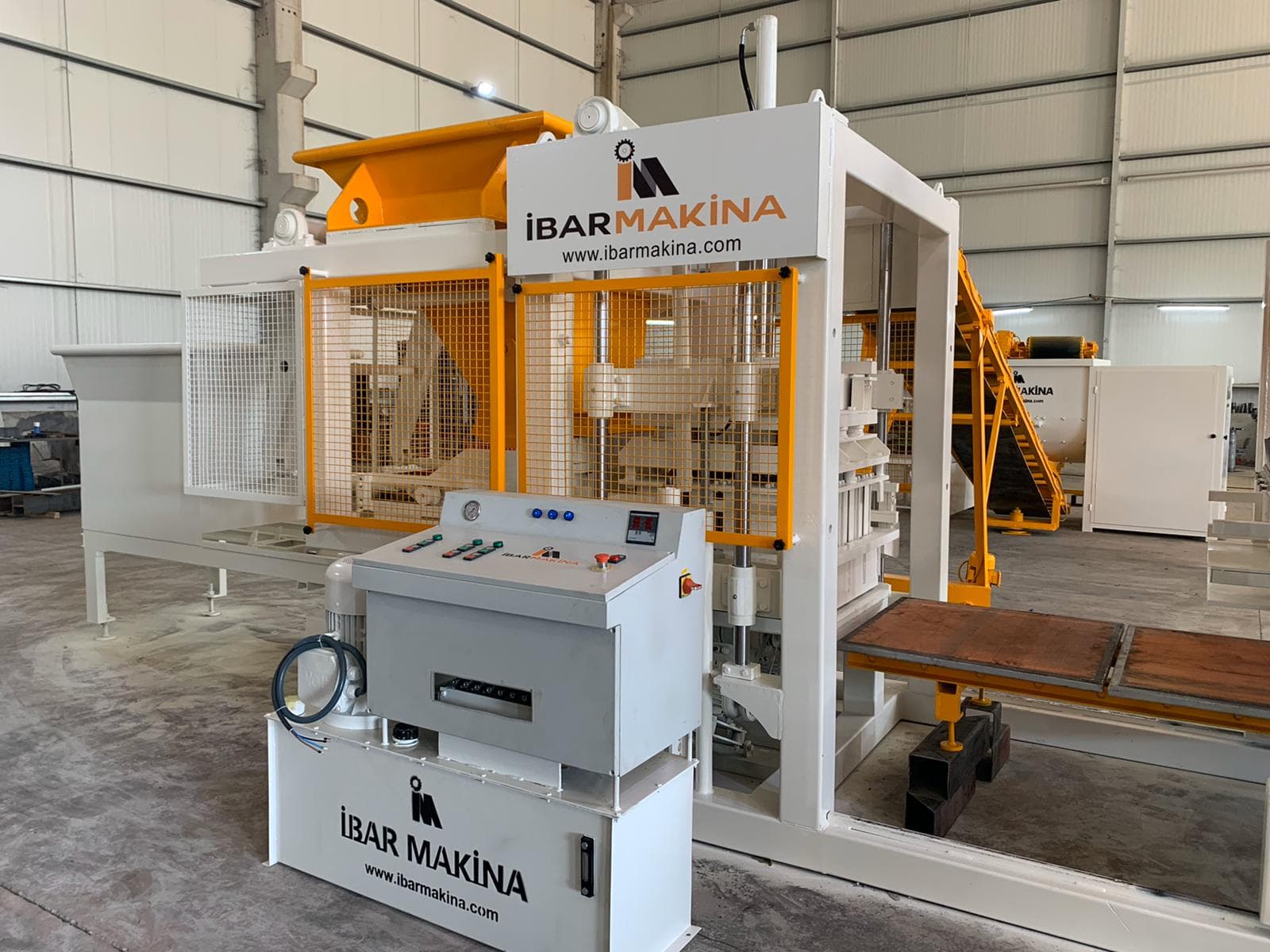
A fine face mix alone does not guarantee a smooth surface; vibration is what makes it dense and free of voids. If vibration is not spread evenly across the mould, some blocks come out with porous tops and rounded edges. On İbar Makina's CBM series, strong vibration motors work under the mould table; because our vibration system compacts the mix evenly across the whole mould, our semi-automatic CBM machines produce pavers with the surface quality normally expected from fully automatic lines. For an investor starting with a semi-automatic line, that means meeting the market's quality expectations for a smaller investment.
Which paving block machine for double-layer pavers?
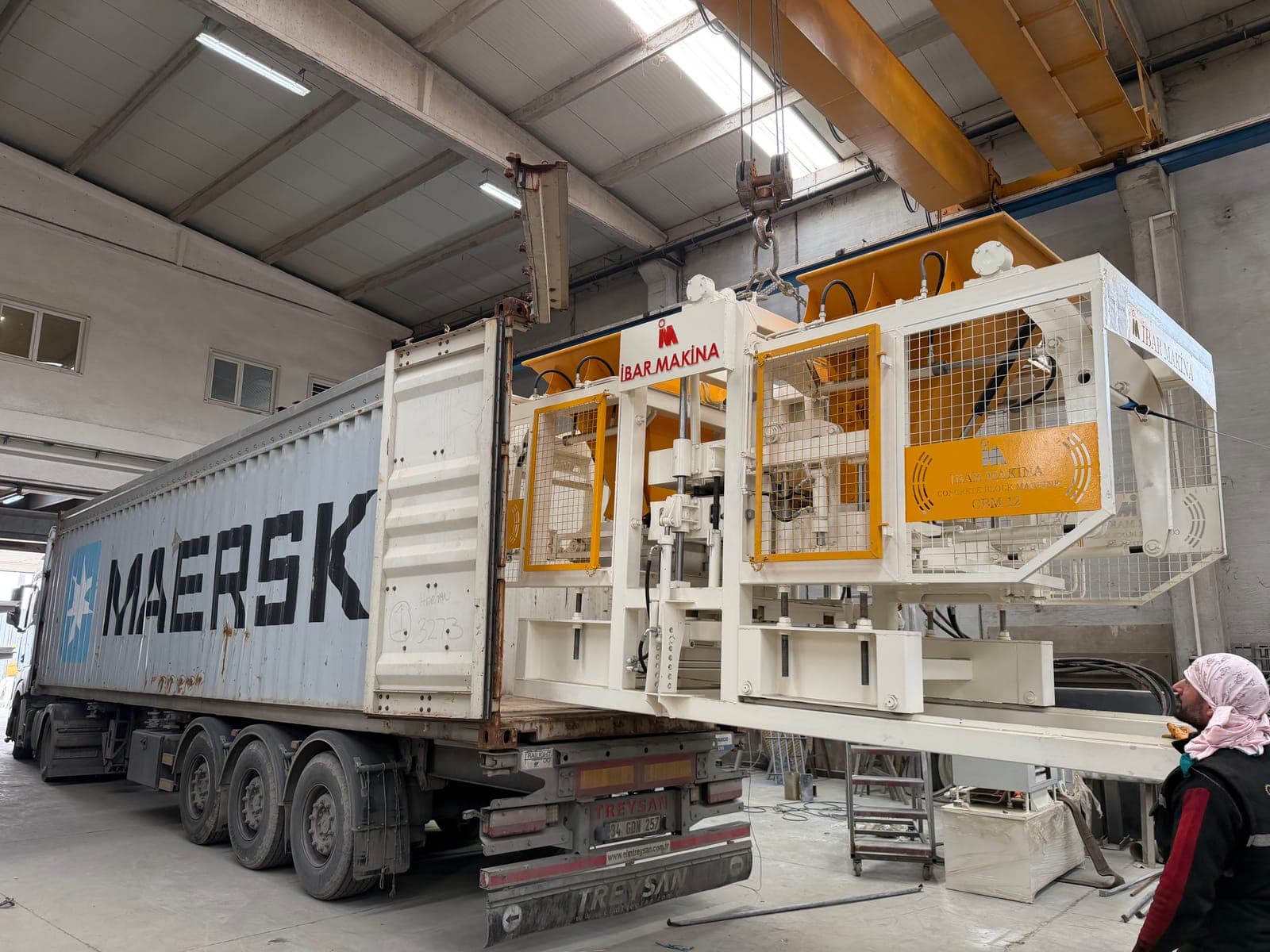
Double-layer production needs two separate hoppers and two feed boxes. İbar Makina's CBM series is built this way, and the same machine also makes concrete blocks and curbstones after a mould change. Figures are taken from our product records:
| Model | Automation | Pavers per cycle | Daily paver output |
|---|---|---|---|
| CBM 12 | Semi-automatic | 12 | about 300 m² |
| CBM 20 | Semi-automatic | 20 | about 400 m² |
| CBM 25 | Semi-automatic | 25 | about 500 m² |
| CBM 25 PRO | Fully automatic (PLC) | 25–70 (by paver shape) | 700–800 m² |
| CBM 36 PRO | Fully automatic (PLC) | 36–99 (by paver shape) | 1,100–1,300 m² |
The BLOCKMASTER series has a single hopper and makes single-layer pavers; it is an economical choice where grey pavers are enough. If you are aiming at coloured, double-layer pavers, start with the CBM series. On the fully automatic PRO models, stone collecting and stacking robots are optional but recommended for fully automatic production. Compare all models on our paving stone machines page, and see what drives the price in our paving stone machine price guide.
An example from the field: CBM 12 in Ouagadougou
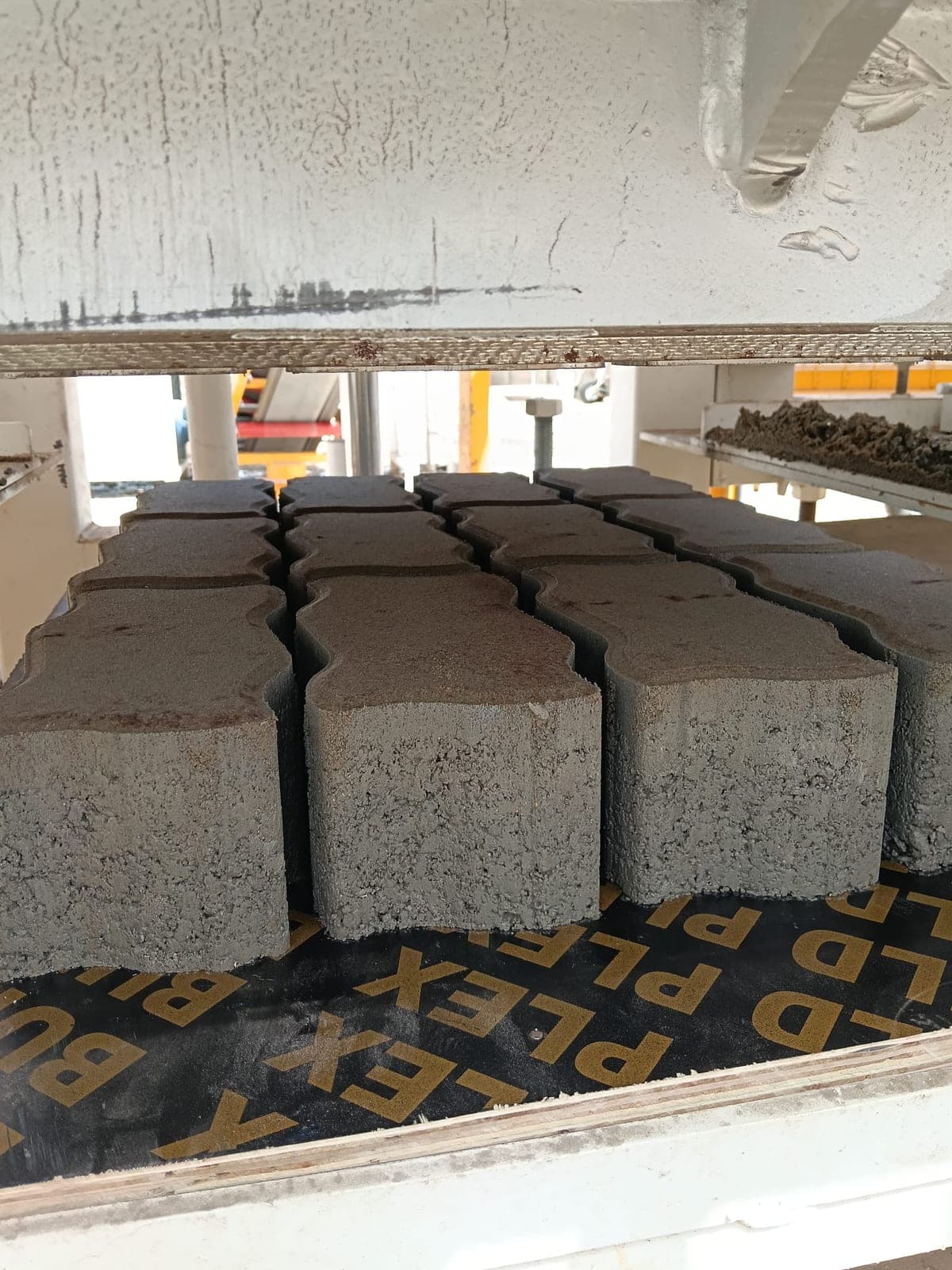
The close-ups of the first pallets from the CBM 12 line we installed in Ouagadougou, Burkina Faso, show the effect of the second layer clearly: the interlocking pavers have a fine, dense top with crisp chamfers, while the body is coarser concrete. After a mould change, the same machine also produced hollow blocks on pallets of five.
Frequently asked questions
Are double-layer pavers stronger than single-layer pavers?
Strength comes mainly from the base concrete and correct compaction. The difference of the second layer is a denser, more wear-resistant surface and colour achieved only at the top, with less pigment.
How thick should the face layer be?
In practice usually 5–10 mm. A very thin layer can expose the body as it wears; a thicker one than needed raises cost.
Can the same machine make grey and coloured pavers?
Yes. On a twin-hopper machine the face mix is made without pigment for grey pavers; for coloured pavers pigment goes only into the face mix.
Does mould maintenance affect surface quality?
Yes. A worn or dirty mould causes burrs on the edges and dimensional deviations. See our paving stone mould maintenance guide.
Tell us the paver types you want to make, your colour goals and your daily square metre target — message us on WhatsApp and we will send you the right CBM model, moulds and price the same day. Installation and operator training are included in the price, and our machines carry a 2-year warranty.