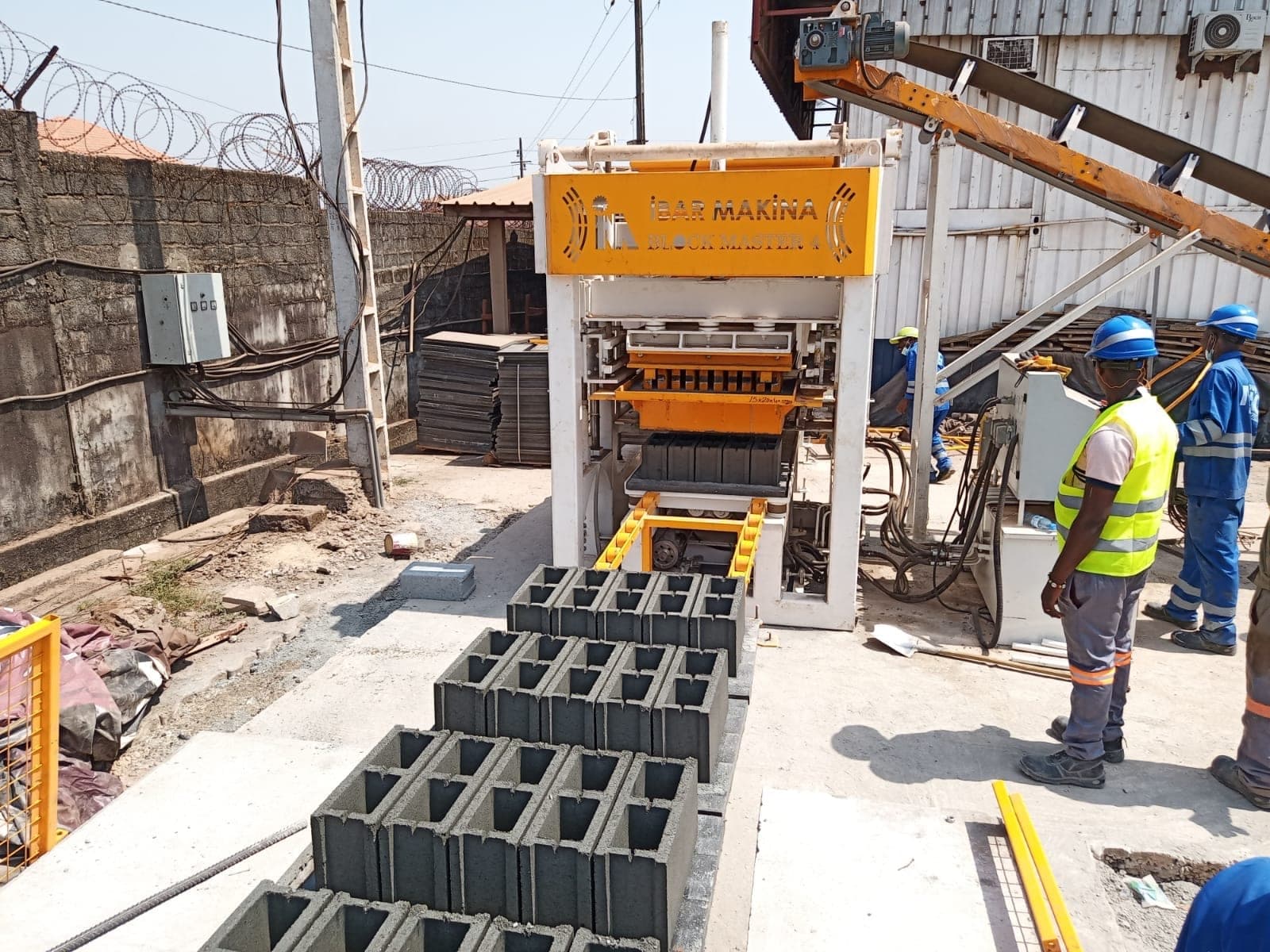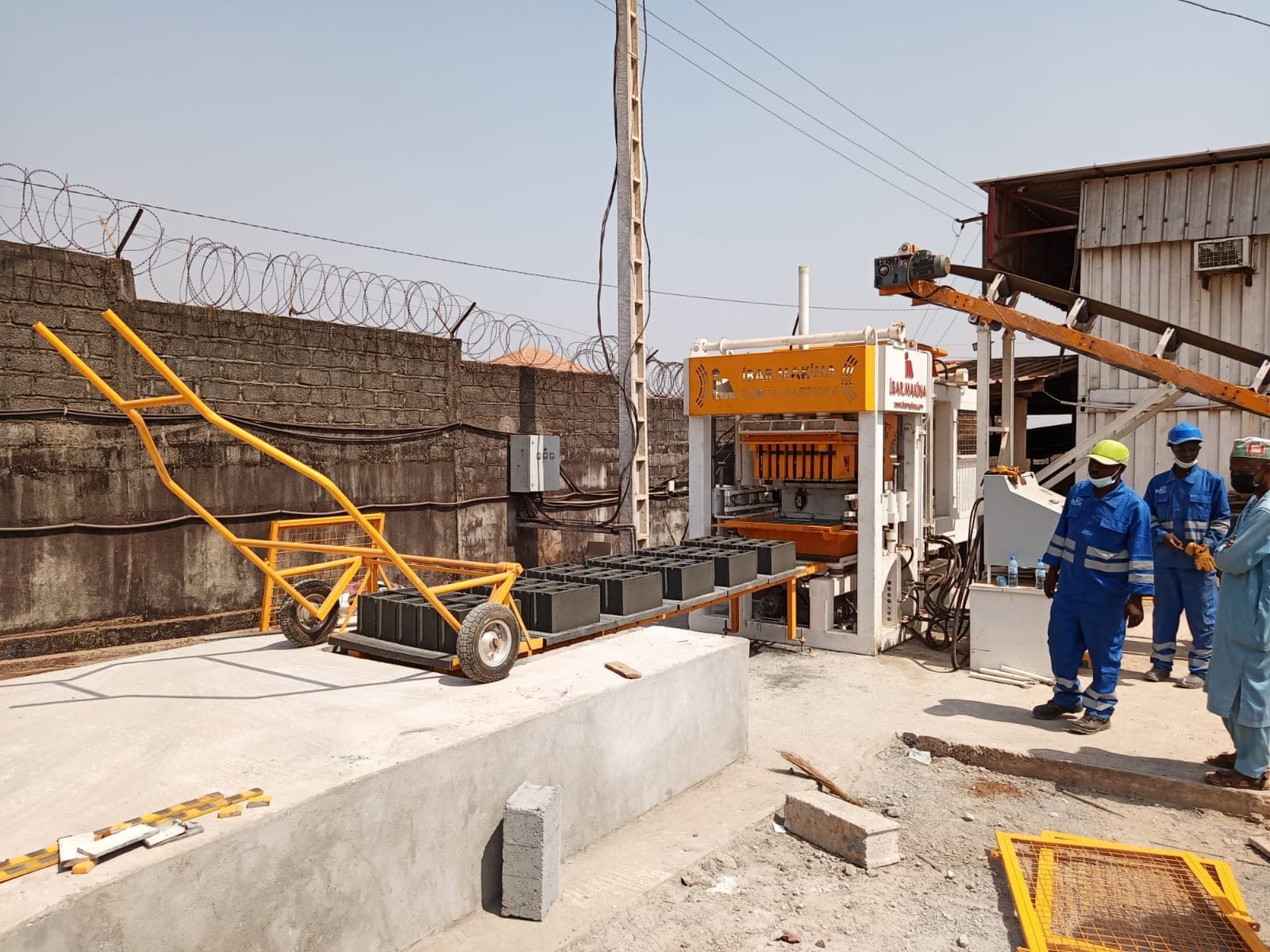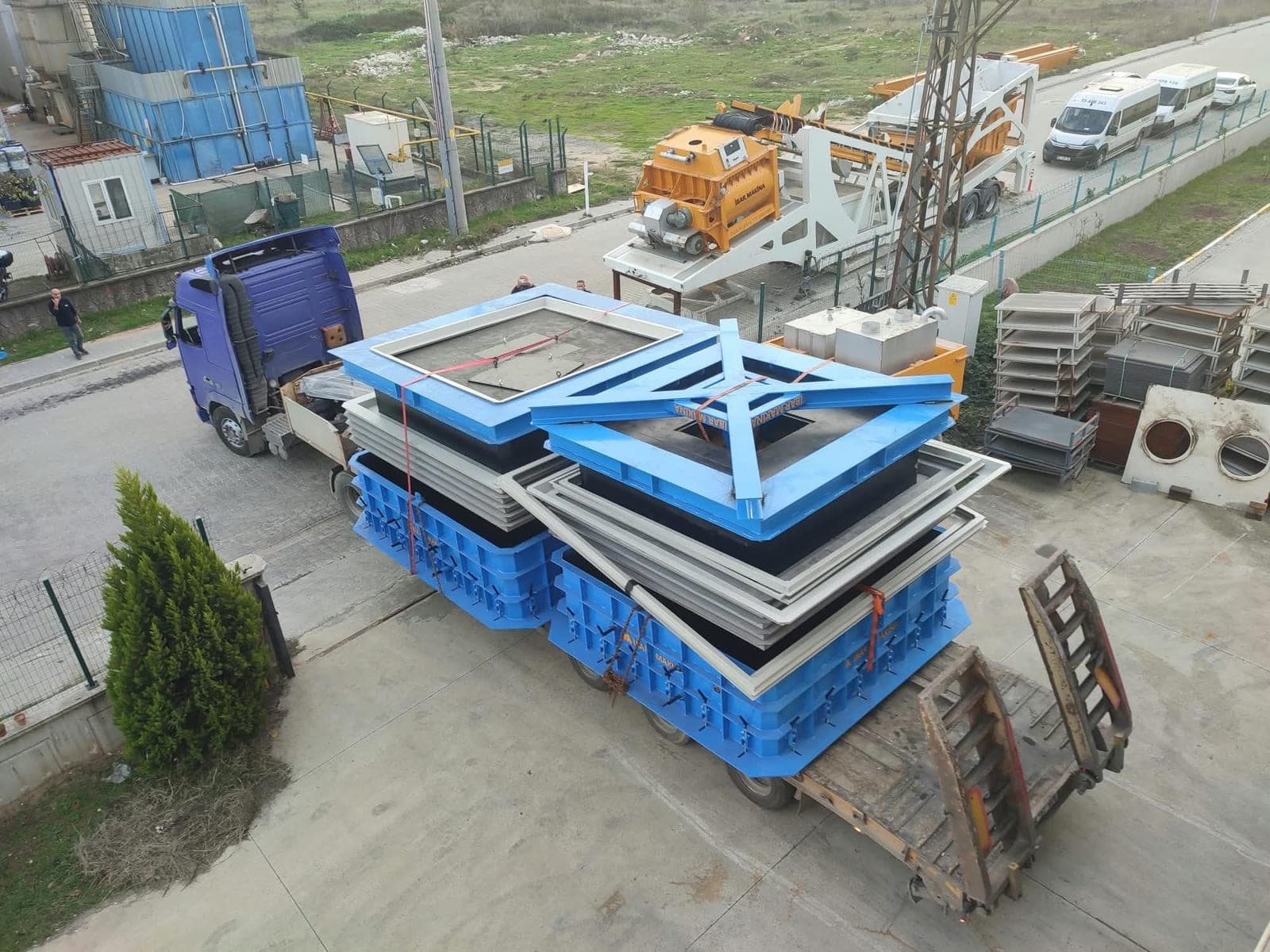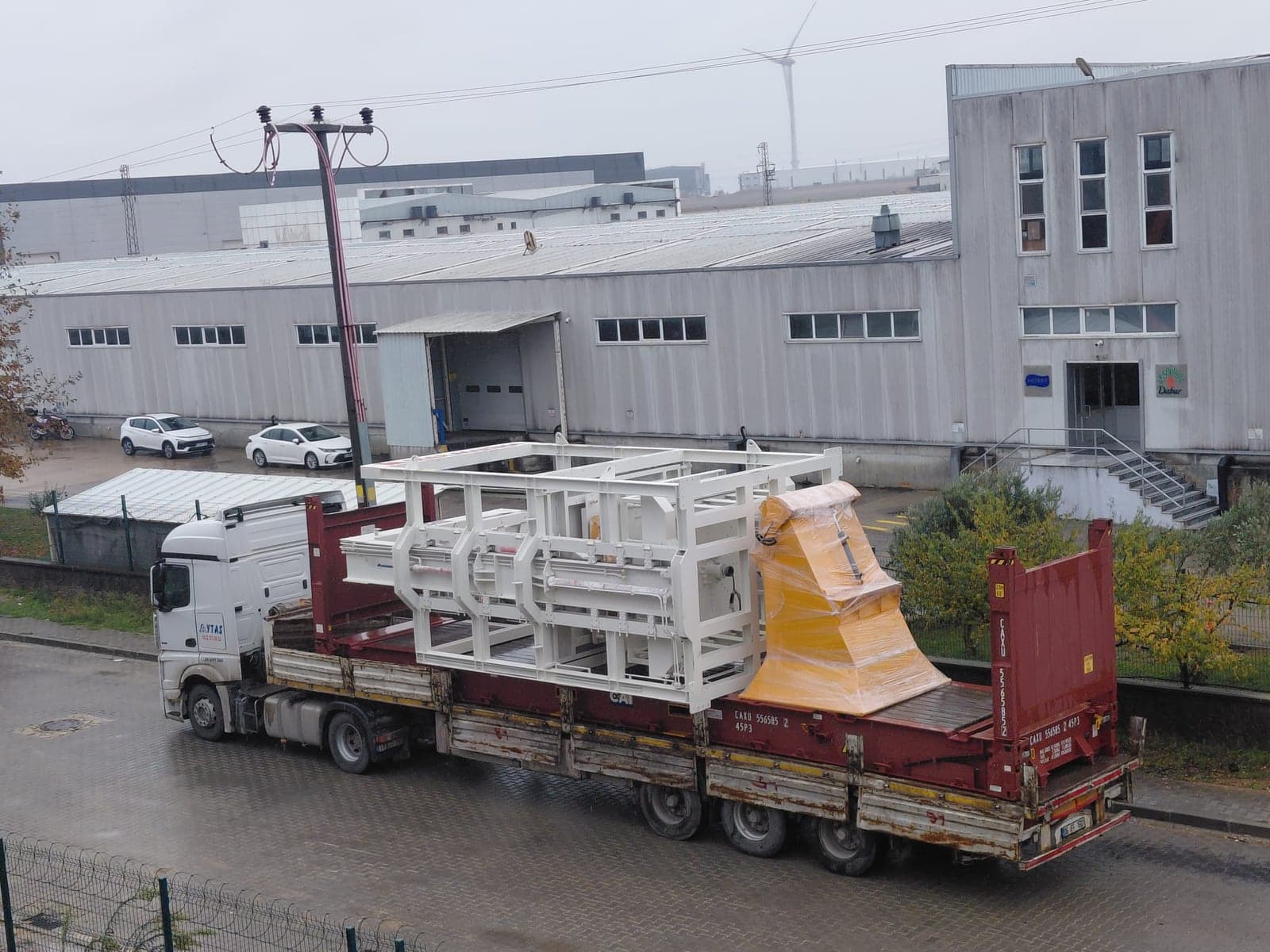




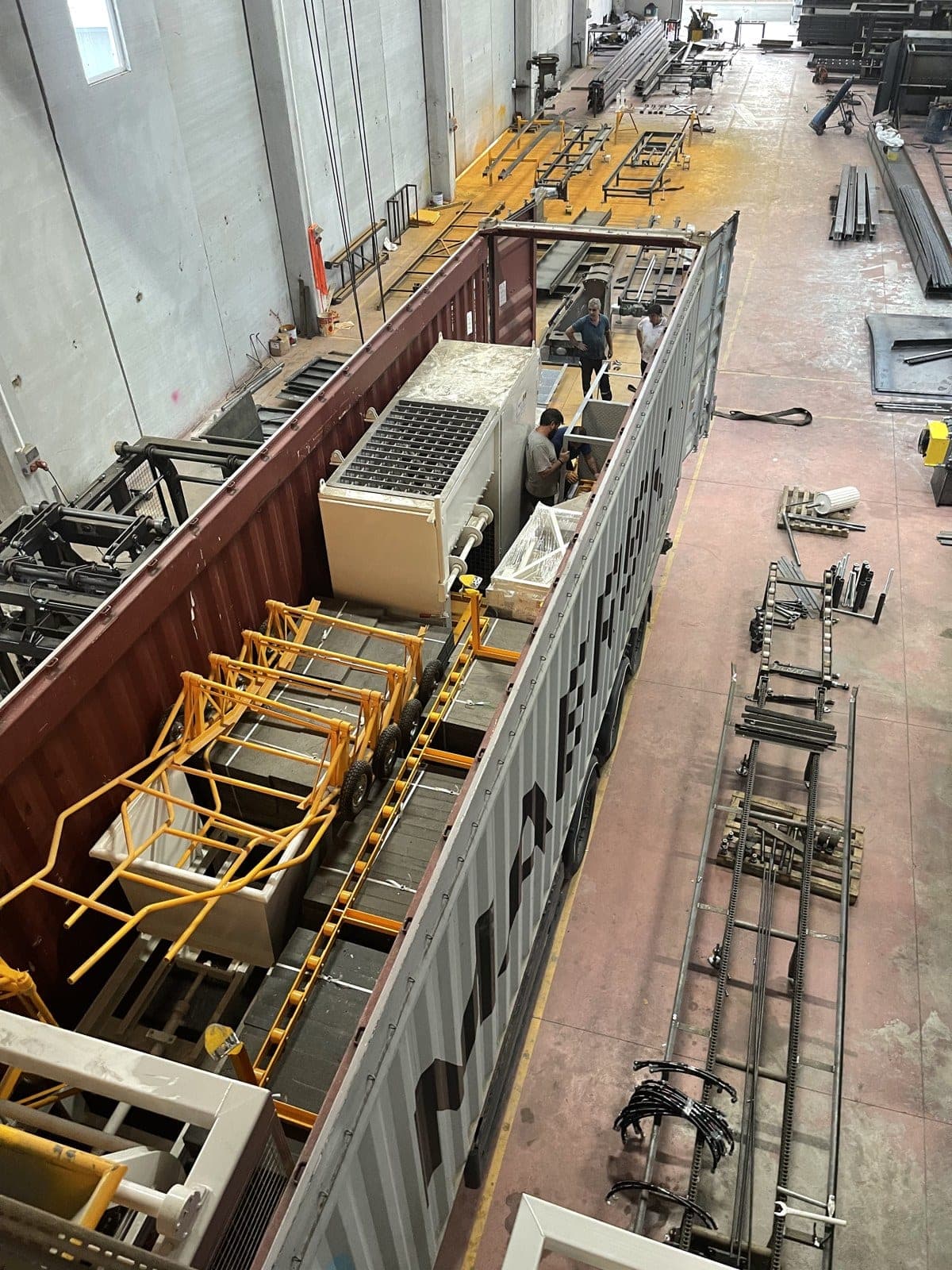
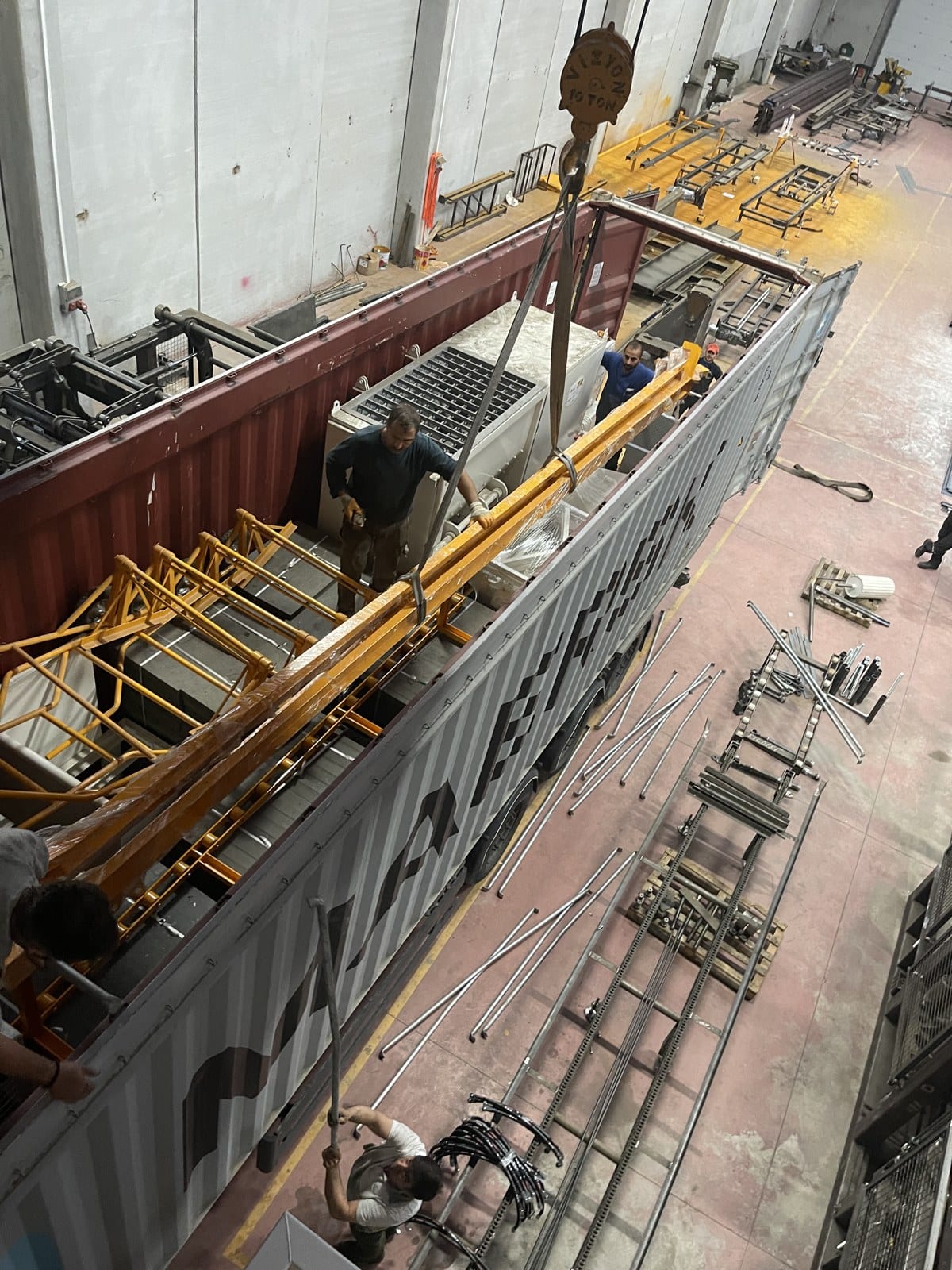
The BLOCKMASTER 4 block making machine whose installation in Conakry we shared earlier started its journey to Guinea at our factory. The machine and every part of the line were lowered by overhead crane into an open-top container in our production hall in Çerkezköy, Türkiye.
What went into the container?
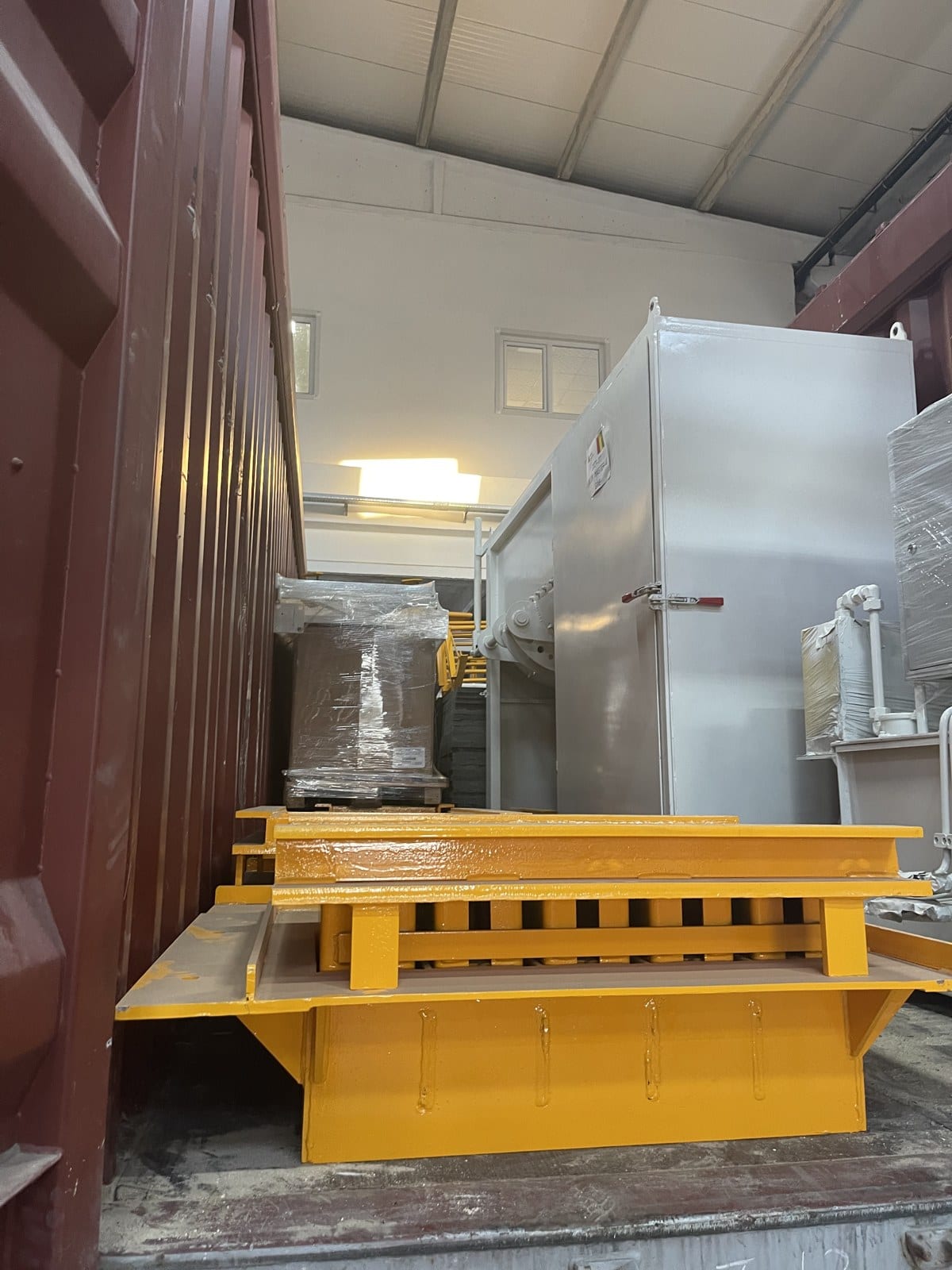
- Mould: the yellow-painted block mould had its own place at the door end of the container.
- Pallet trolleys: the wheeled trolleys that will carry fresh blocks from the front of the machine to the curing area were nested into each other to save space.
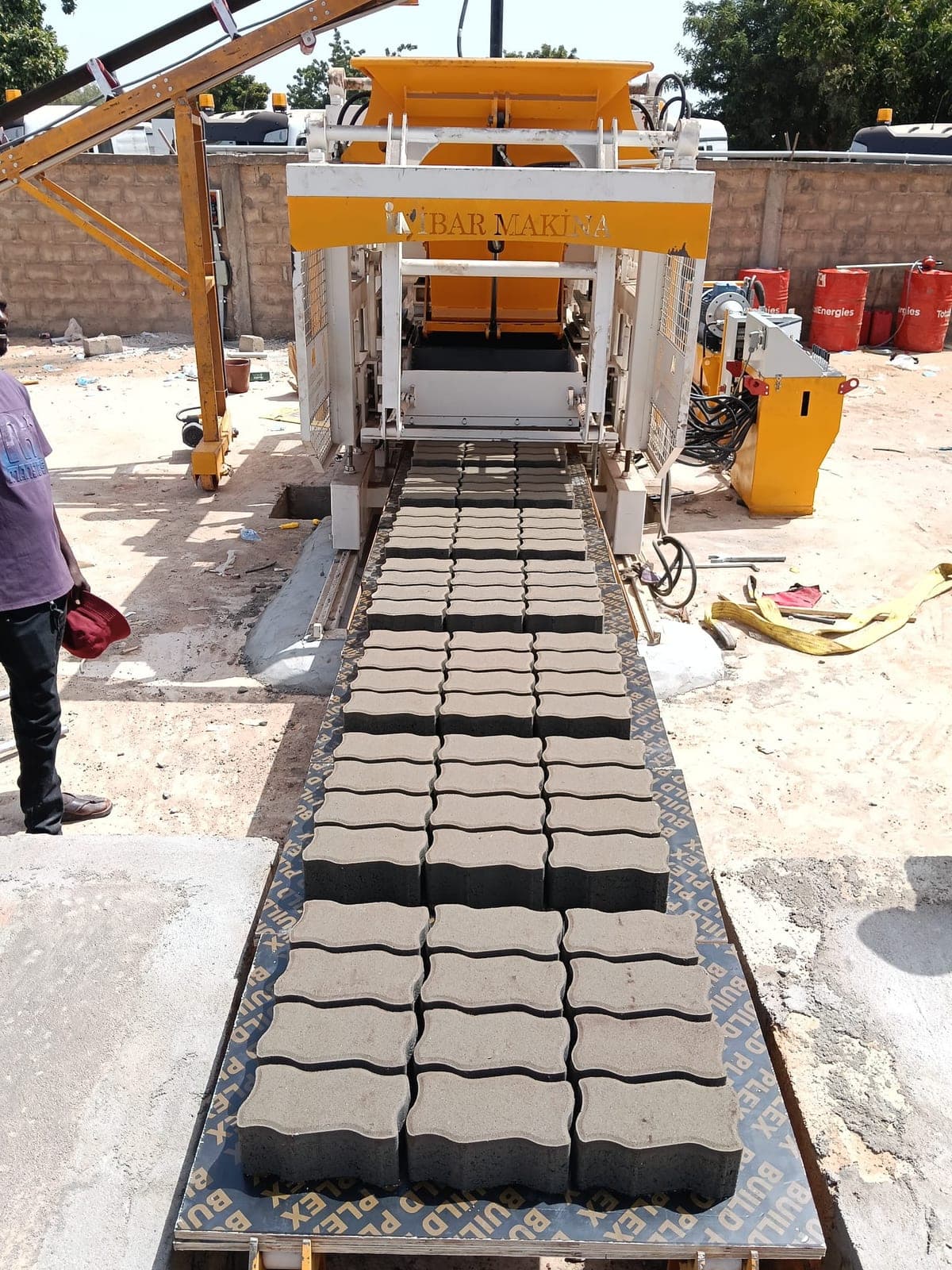
- Production pallets: the pallets on which the machine presses blocks in every cycle were laid on the container floor in strapped stacks.
- Belt conveyor: the long frame of the conveyor that will feed concrete mix into the machine hopper was wrapped in stretch film and lowered in from above by crane.
- Main body parts and auxiliary equipment: the large body parts of the line and other film-wrapped equipment went into the front section; the Guinean flag stands out on the shipping label.
An open-top container lets long, bulky parts such as the conveyor frame go in from above, without being squeezed through the doors and without knocking into each other.
What happened in Conakry?
Once the machine reached Conakry, our team installed and commissioned the line, and the customer's operators ran the first production together with our technicians. You can see photos and a video of the plant on the Conakry installation reference page.
BLOCKMASTER 4 at a glance
The semi-automatic, single-hopper BLOCKMASTER 4 produces 4 blocks of 200 mm, 5 blocks of 150 mm or 8 blocks of 100 mm per cycle, which means about 4,000, 5,000 or 8,000 blocks a day. With a mould change it also makes kerbstones and hollow floor blocks. The machine runs 100–120 pallet cycles per hour on 90 x 60 cm pallets.
If you are planning block production in West Africa, message us on WhatsApp with your daily target and we will plan the machine, mould and shipment together.