



How does a concrete batching plant work, and what main equipment does it need? A concrete batching plant is a facility that produces ready-mix concrete by mixing aggregate (sand, gravel or crushed stone) with cement and various admixtures, and then loads it into trucks or truck mixers.
Main Components of the Plant
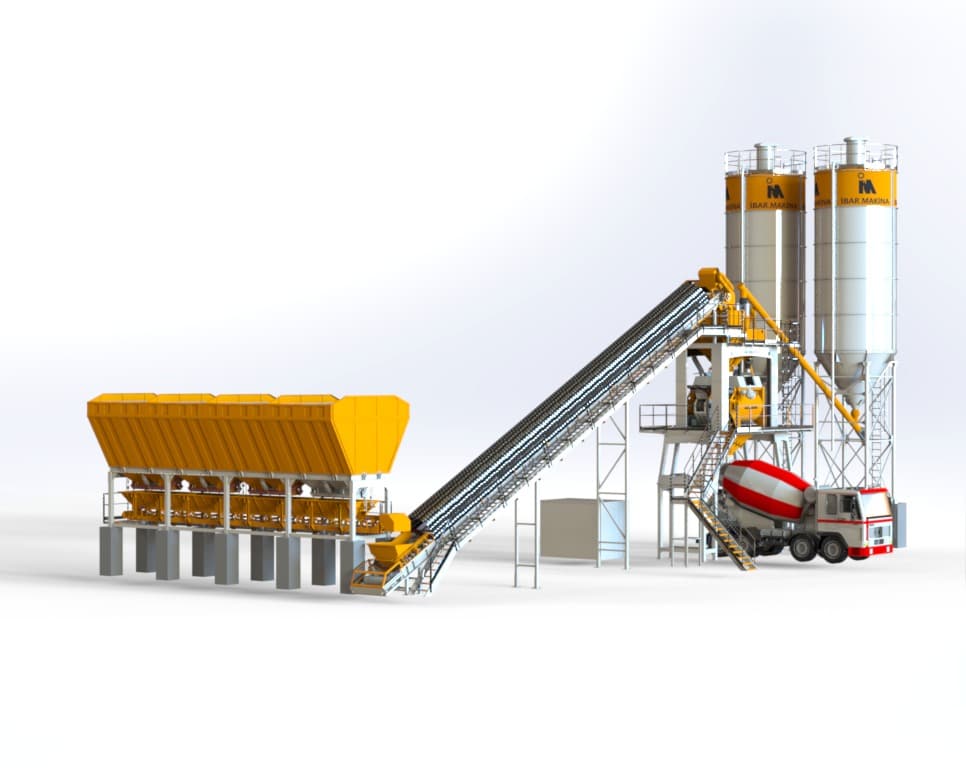
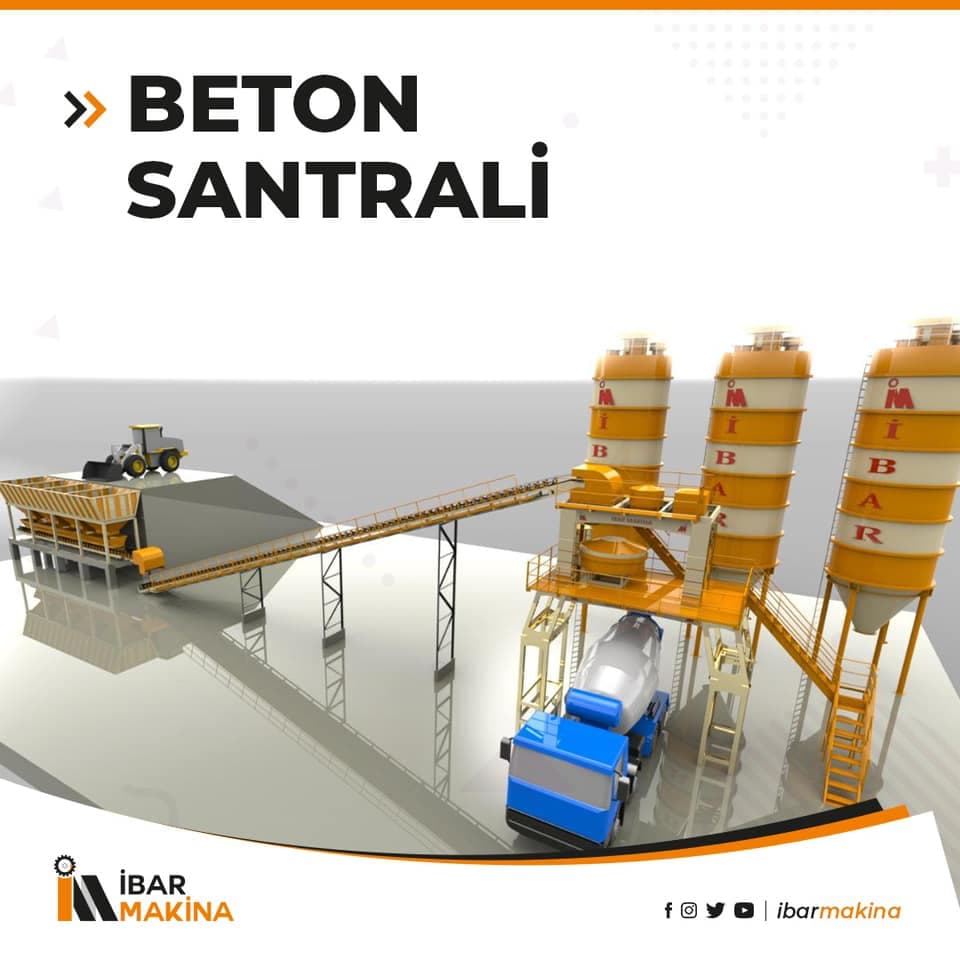
The main components of a concrete batching plant are the aggregate weighing belt, the mixer feed belt, the aggregate bins, the main chassis group that carries the mixer, the cement silo and its equipment, and the automation system that controls the plant.
There are 4 different types. The most commonly used are:
- Mobile concrete batching plants, which are easy to install and are used for short-term projects and frequent relocations;
- Stationary concrete batching plants, which are designed to produce high-quality concrete for long-term projects and are among the most widely used.
- Compact concrete batching plants, which are also easy to install, cost-effective and easily transported over long distances, and are among the plants frequently used in our country.
Many Advantages
Compact concrete batching plants, which can easily be installed in confined spaces and are much more economical to transport, offer many advantages. Designed to produce concrete with the required properties, a concrete batching plant contains everything needed for ready-mix concrete. All the equipment required to determine in what proportions and how the materials should be mixed, and to which standards, is integrated into the plant.
Tested from the Very First Stage
In addition to the materials required for concrete production, the equipment also determines the quantities and ratios in which these materials are to be used; the materials are then mixed to produce ready-mix concrete. With a simple and practical working principle, operating system and layout, a concrete batching plant runs very safely, and all the technology and systems needed for both active operation and control are put in place. The plant is tested from the very first stage against any problems that may arise, with the aim of running the control system and the machinery simultaneously and at the same efficiency. This creates a well-coordinated system: although they may use different operating systems, all concrete batching plants work according to defined proportions and a defined system.
Manufacturing Requires Experience
The key feature of mobile concrete batching plants is that they aim to deliver trouble-free concrete by adding all materials consistently and in the same proportions.
How does a concrete batching plant work? The manufacture of a concrete batching plant requires experience, professionalism and continuous research and development, and the conditions of the site where the plant will be installed must be assessed very carefully. The capacities of the equipment that make up the plant must be properly matched to one another. If these requirements are not met, disruptions during production can lead to lower concrete quality. In an ideal concrete batching plant, if a mixer with a capacity of more than 1 cubic metre is used, it should generally be a twin-shaft mixer.
The Mixer Is What Matters Most
At high volumetric capacities, a twin-shaft mixer takes up less space than a pan mixer, while ensuring that large batches are mixed perfectly. When it comes to how a concrete batching plant is used, the key points are the type of mixer and the quality and suitability of the electrical automation system. Load cells, which perform the weighing and are produced in many forms, are selected according to how they will be used.
Inaccurate Weighing Means Poor-Quality Concrete
S-type load cells are used for the raw material on the belt below the bins, while the mix inside the mixer is weighed with bar-type load cells. As precision digital weighing devices, load cells ensure that weighing is carried out accurately. If weighing is not done correctly, the result is poor-quality, non-standard concrete production, which will cause you to lose money on production.